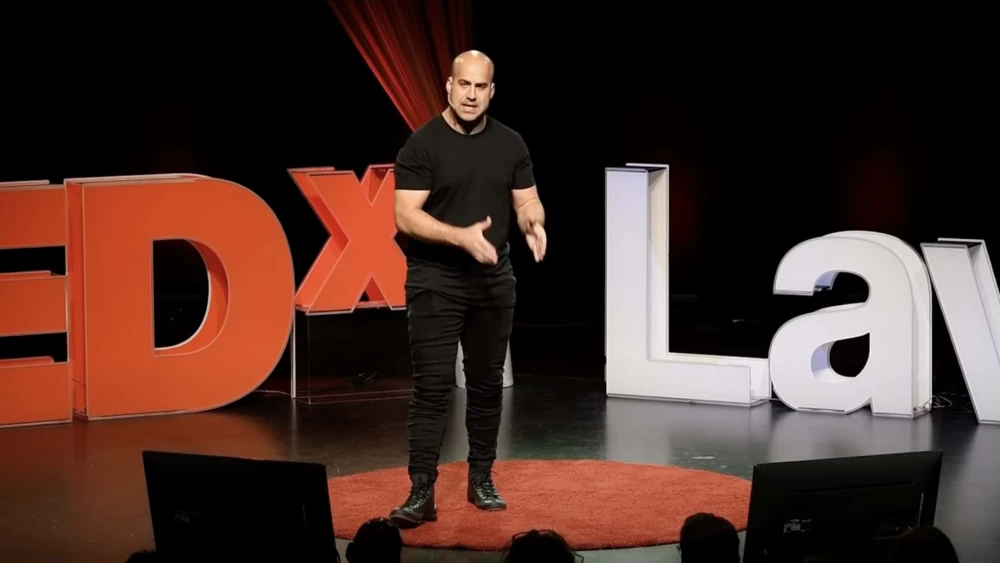
Corey Fleischer, 27, drove past a large spray-painted swastika on the way to work one day. Thinking better of that decision, he dismissed his fellow driveway power-washers and went back and cleaned the antisemitic graffiti up pro bono. He’d found his calling.
“I jumped out of my truck, mixed cleaning solution and I put the full force of water on that piece of hate, slowly seeing it erase,” the Montreal man, who is Jewish, told Yahoo Canada. “The rush I felt from that was a sense of euphoria I had been searching for my entire life.”
Fourteen years later, Fleischer is still cleaning up hate speech—literally. And he has inspired a broader movement called Erasing Hate. He has removed hateful symbols as far as Alaska and Poland, and people can report hateful graffiti via his groups accounts on Instagram and Facebook, which have 142,000 and 51,000 followers respectively.
Fleischer has even helped former neo-Nazis remove their bigoted tattoos through a global network of artists he convened who are willing to do such work for free.
The public can help remove hateful symbols without investing too much, Fleischer told Yahoo. “Ninety percent can be erased with stuff under $5 at your local dollar store.”