The Israel Defense Forces released statistics on Sunday showing that attacks by Hamas on Israel have risen dramatically in the last three years.
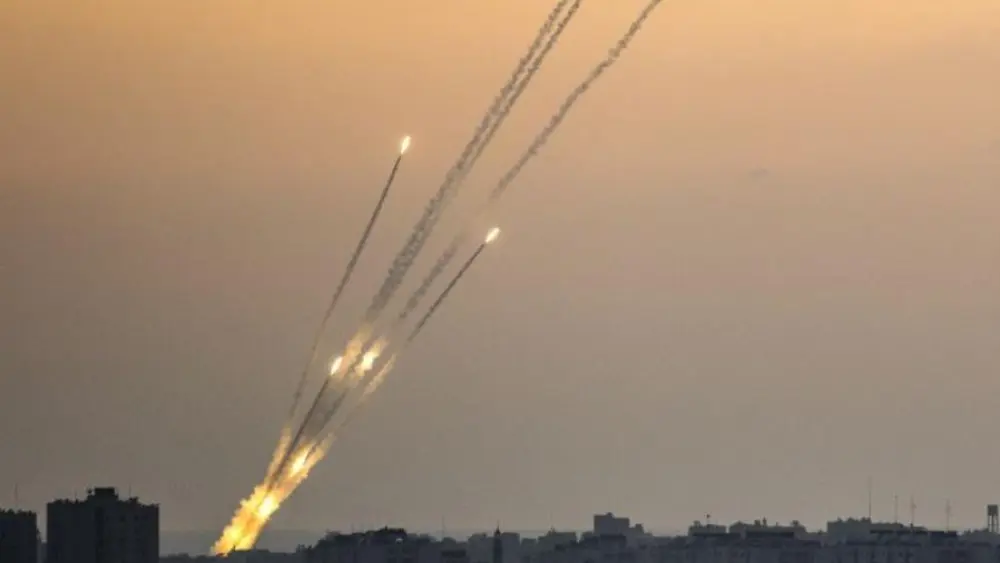
According to the data, Israel was hit by 1,000 rockets and mortars in 2018, with 250 intercepted by Israel’s Iron Dome missile-defense system and 45 landing in populated areas.
The majority of the projectiles were fired into southern Israel in late November, when nearly 500 rockets were launched at Israel in just 48 hours after a botched Israel Defense Forces’ commando raid in Khan Younis.
The IDF responded to the attacks by targeting 865 terror and military positions in Gaza.
In 2017, Hamas fired 35 projectiles at Israel and even less the year before that.
To date, Israel has completed 27 kilometers of an underground barrier to prevent the digging of tunnels to cross from Gaza into Israel. Israel has destroyed 15 terror tunnels in the past year.
According to the IDF, seven soldiers and nine civilians were killed, and 199 injured, in 87 terror attacks in 2018.
Stone-throwing attacks were also down to 2,057 from 5,082 in 2017.
Stabbing attacks were up to 17 from five in 2017.
A total of 406 weapons were confiscated by authorities this year. The IDF said that a total of 3,173 Palestinians were arrested by security authorities in 2018.