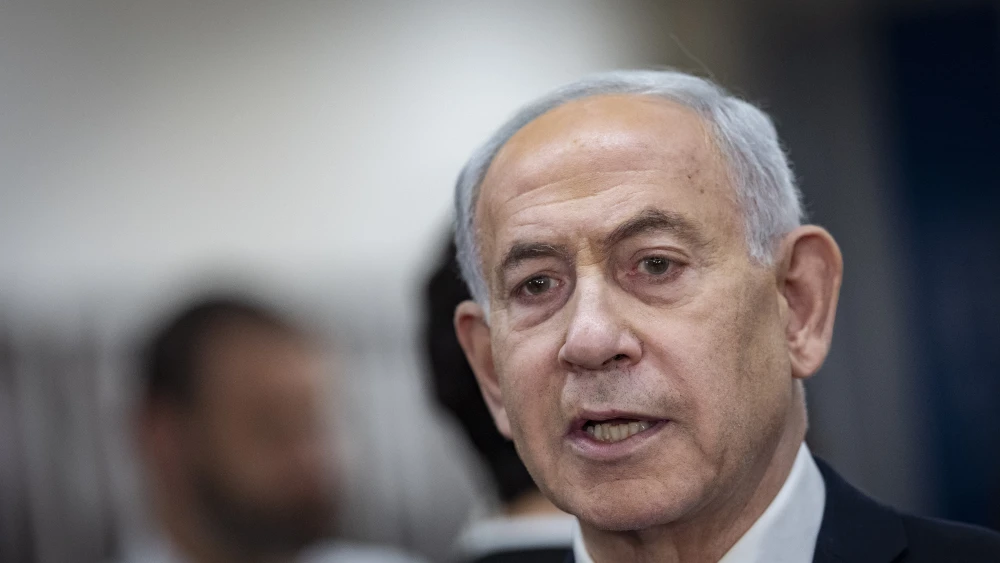
Prime Minister Benjamin Netanyahu said on Saturday that he is willing to let Yashar party chairman Gadi Eisenkot serve first as the prime minister of an Israeli national unity government, with himself serving as alternate prime minister as part of a rotation agreement.
“Naturally,” Netanyahu wrote in a Hebrew-language post on X, “I should lead the unity government, or at least be first in the rotation,” because my Likud faction won the most seats in the general election on Oct. 27.
“But given the gravity of the existential danger and the possibility that a government will be formed that lacks the ability to confront it, my responsibility as a leader requires me to set everything aside, including the principle of the largest party, and agree that Gadi Eisenkot will serve first as prime minister, while I will serve as alternate prime minister at the beginning of the term,” the incumbent premier said.
Israel’s longest-serving prime minister added that given his willingness to compromise, he expects “genuine, sincere and accelerated negotiations” that will see similar compromises and concessions by the opposition bloc.
Netanyahu went on to say that since the latest development in his corruption trial, in which the judges in a hearing on Wednesday proposed dropping some of the charges against him, many have approached him with a “yearning for unity.”
He warned once again against a minority government backed by those he deems “supporters of terrorism,” referring to the predominantly Arab parties that secured 19 Knesset seats.
He said these lawmakers are planning to grant Israeli citizenship to hundreds of thousands of Palestinians under the pretext of family reunification, referring to legal procedures where Palestinians can obtain residency or citizenship status to live with family members in Green Line Israel.
He also warned about plans to establish an “Arab autonomy” in the Galilee and the Negev; about a withdrawal of the Israel Defense Forces from the security zones in Gaza, Syria and Lebanon; and about “an Iranian-backed Palestinian state on the ruins of the State of Israel.”
Netanyahu said that the majority of Israel’s citizens are not “falling into the trap of this transparent ploy,” adding that unity is “the need of the hour.”
אזרחי ישראל,
— Benjamin Netanyahu - בנימין נתניהו (@netanyahu) November 28, 2026
לפני ימים אחדים, האמת והצדק יצאו לאור בבית המשפט. זה קרה בזכות רבים בעם ישראל שעמדו לצידי בעשור האחרון, ובראשם רעייתי שרה ובניי יאיר ואבנר – שעברו סבל קשה ותמכו בי בכל החזיתות.
בימים האחרונים, ראינו דבר נוסף: מראות מזעזעים בכנסת - עזיבת האולם בעת ההמנון, הפניית הגב…
Eisenkot sets deadline for unity government with Netanyahu
Responding on Saturday evening to Netanyahu’s offer, Eisenkot said he is willing to seriously consider it in the next 24 hours.
“I invite Netanyahu and his team, tonight, to the Dan Accadia Hotel in Herzliya, where I am staying with my negotiating team, to conduct genuine and accelerated negotiations on basic guidelines and policy issues,” Eisenkot wrote in a Hebrew-language statement.
He disclosed that a detailed proposal was delivered to Netanyahu on Nov. 15 through a secret channel established between the negotiations teams. In it, Eisenkot said, his party made significant compromises before signing coalition agreements with other factions.
“As of this moment, we have received no response on these issues,” he said, adding that he intends to form a government in the “coming days” on the basic principles that he has laid out.
האחדות לה ישראל זקוקה, לה אני נכון ועבורה אני מוכן לשלם מחירים פוליטיים - היא אחדות בין אזרחי ישראל על בסיס ערכים; אחדות של דרך חדשה ואחרת, שתוקיר ותעלה על נס את הסולידריות הישראלית אותה אני רואה כרכיב בסיסי בביטחון הלאומי של ישראל.
— Gadi Eisenkot - גדי איזנקוט (@gadi_eisenkot) November 28, 2026
לכן, ביום ראשון האחרון הועברה הצעה מפורטת…
MK Yair Lapid, a former Israeli prime minister and No. 2 in former Prime Minister Naftali Bennett’s B’Yachad party, slammed Netanyahu’s proposal, describing it as “another transparent con by a serial fraudster who has cheated every partner and broken every agreement.”
He said that the “only way to test the proposal is to swear in a government led by Eisenkot, and only then can negotiations begin on the possibility of expanding it.”
הצעת נתניהו היא עוד תרגיל עוקץ שקוף של רמאי סדרתי שרימה כל שותף והפר כל הסכם.
— יאיר לפיד - Yair Lapid (@yairlapid) November 28, 2026
הדרך היחידה לבחון את ההצעה היא להשביע ממשלה בראשות איזנקוט ורק אז אפשר יהיה לנהל מו"מ על האפשרות להרחבתה.
Shortly after Lapid’s message, Bennett issued a statement saying that Netanyahu “made the right call” by letting Eisenkot take the premiership reins first.
“Now the burden of proof is on Netanyahu to show that this is a genuine intention, not lip service,” Bennett wrote.
He then listed four principles for a unity government: establishing a state commission of inquiry into the Oct. 7, 2023, massacres, limiting the prime minister’s term to eight years, reaching an agreement on legislation relating to the judicial system, and advancing legislation for the benefit of IDF soldiers, although he did not specify universal conscription for all, which would include Haredi men.
“We must not allow stalling or pointless discussions aimed at thwarting the formation of a government without him. Time is short,” Bennett said.
נתניהו קיבל את ההחלטה הנכונה כשהודיע כי מוכן לממשלת אחדות בראשות איזנקוט תחילה, ממשלה על בסיס ברית המשרתים.
— Naftali Bennett נפתלי בנט (@naftalibennett) November 28, 2026
ליבת ממשלה כזו היא מפלגות המייצגות את הציבור הציוני המשרת.
לא נהיה תלויים במפלגות קצה לא ציוניות.
הציבור המשרת והעובד יקבל מחדש את ההובלה של מדינת ישראל מידיי מפלגות…
Eisenkot: Unity is not about PM rotation deal
On Friday, Eisenkot released a statement in Hebrew in which he said he intends to form a government within the remaining eight days of the mandate granted to him by the Israeli president to build a coalition.
He then accused Likud of refusing to compromise on “essential” subjects during five negotiation meetings over the past two weeks.
“Two weeks and five meetings are enough time to have already reached an agreement, if they had wanted one,” Eisenkot said.
The former IDF chief said that unity is not about who gets to serve as prime minister first but about “substantive issues at the heart of our lives.”
He said that Likud representatives did not put forward any concrete proposal over subjects such as an Oct. 7 state commission of inquiry or a universal conscription law.
Eisenkot said that his side was willing to compromise on any number of these issues, such as establishing an agreed-upon joint commission on reform of the judicial system and relations between the branches of government—a politically contentious issue that Netanyahu’s government promoted before the Hamas-led Oct. 7 attacks. The newly sworn-in Knesset has since demanded to repeal laws passed by the previous Knesset on judicial reform.
Eisenkot accused Likud of trying to drag out talks until the end of his mandate to form a government, to force “another election under the outgoing [caretaker] government.”
He then said that of the available options for forming a government, working with Likud was the worst. “There is no value in sharing a role if there is no shared commitment to the same values and path,” Eisenkot said.
He added, “If Likud wants to genuinely change its ways and is willing to make courageous leadership decisions, my door is still open and my hand is still extended. This is not an empty statement.”
בשורה התחתונה: הם לא נוהגים ופועלים כמי שרוצים אחדות ושותפות, אלא כמי שנחושים למשוך זמן ככל הניתן עד לסיום תקופת המנדט, לפלג את גוש השינוי ולדרדר את ישראל לבחירות נוספות תחת הממשלה היוצאת. מצב שכל מפלגות השינוי והתיקון הגדירו כמסוכן לישראל.
— Gadi Eisenkot - גדי איזנקוט (@gadi_eisenkot) November 27, 2026
4. לאלו שבאמת רוצים ממשלת אחדות. אני…
Bennett: Non-Zionist government a ‘dramatic concession’
Bennett said on Friday that he favors a Zionist unity government led by Eisenkot, which is “by far the best alternative for the State of Israel.”
He said that such a government, presumably without the ultra-Orthodox parties, would be able to pass a conscription law that would ensure Haredi men serve in the IDF.
The alternative would be a “dramatic concession” by those who serve in the military, he said. Ending the Haredi evasion of military service was one of Bennett’s main promises during the election campaign.
He said that he is trying to forge an agreement that would include Likud, but stressed that “under no circumstances” would his party leave its allies in the opposition to join Netanyahu’s bloc.
גם בעת הזאת אני מאמין שהחלופה הטובה ביותר, בפער, עבור מדינת ישראל והציבור המשרת היא ממשלת אחדות ציונית בראשות איזנקוט תחילה.
— Naftali Bennett נפתלי בנט (@naftalibennett) November 26, 2026
זו ממשלת ברית משרתים שתוכל לגייס את החרדים ולהציב את המשרתים בראש.
החלופה האחרת כרוכה בויתור דרמטי על גיוס חרדים ועל מהפכת המשרתים, לצד הסתמכות על מפלגות…
Meanwhile, The Democrats’ leader Yair Golan announced on Friday that his party had reached a coalition agreement with Eisenkot’s Yashar.
“We can welcome the fact that, if a government is formed, The Democrats will have four ministers in positions critical to Israel’s future, alongside the chairmanship of key Knesset committees, first and foremost the Constitution, [Law and Justice] Committee, which will serve as the guardian of Israeli democracy,” he stated in Hebrew on X.
He then turned to his partners in the opposition bloc, urging them not to waste time on negotiations with Netanyahu, whom he branded a “danger to Israel’s future.”
ארבע שנים נאבקנו על דמותה ועתידה של מדינת ישראל. עכשיו הגיע הזמן לעבור משלב המאבק לשלב העשייה.
— Yair Golan - יאיר גולן (@YairGolan1) November 27, 2026
מהרגע שהסתיימו הבחירות אנחנו פועלים ללא לאות להקמת ממשלת שינוי. עשינו הכל, אבל הכל, כדי שזה יקרה. גם במחיר של ויתורים כואבים, מתוך הבנה עמוקה של גודל השעה ושל מה שמונח על הכף.
אני שמח…
Liberman brands rotation deal with Netanyahu ‘a ploy’
On Thursday, Avigdor Liberman, chairman of Yisrael Beiteinu, speculated that Netanyahu might offer Eisenkot a rotation deal in which Netanyahu would be second as prime minister.
“But everyone needs to be clear: This is just a ploy,” Liberman wrote in a statement.
He said that Netanyahu seeks new elections and will look for a pretext to “blow up” negotiations over a unity government at the last moment. If indeed a government with Netanyahu is formed, Liberman continued, he “will try to engineer a crisis within a few months to drag Israel back to elections.”
ממשלת השינוי קורמת עור וגידים.
— אביגדור ליברמן (@AvigdorLiberman) November 26, 2026
נתניהו ינסה לטרפד את הקמתה בכל מחיר. אני לא פוסל אפשרות שיציע לגדי איזנקוט רוטציה, שבה נתניהו יהיה שני, אבל לכולם צריך להיות ברור: זהו תרגיל בלבד.
במיוחד אחרי ההתפתחויות אתמול בבית המשפט, נתניהו רוצה יותר מכל בחירות חדשות. לכן הוא ימשוך את המשא…
Speaking to Channel 12 in an interview aired on Friday night, Joint List leader Yousef Jabareen called on the so-called “change bloc” led by Eisenkot to make “courageous decisions” at this “historic moment.”
Jabareen said that the bloc’s leadership has an opportunity to advance a “substantive alternative for Jews and Arabs to work together.”
לא צריך להסכים על הכול.
— Yousef Jabareen (@DrJabareen) November 28, 2026
יש בינינו פערים משמעותיים, אבל אני עדיין מאמין שאפשר למצוא את הבסיס המשותף שיאפשר לסיים את כהונתה של ממשלת הדמים הזאת ולקדם תיקון ושינוי לטובת כולם.
כי בלעדינו אי אפשר להביא את השינוי המיוחל. אבל יחד איתנו, זה בהחלט אפשרי. pic.twitter.com/MfHY7fiTr9
On Nov. 3, Jabareen reiterated his willingness to support an opposition-led government seeking to replace Netanyahu without joining the coalition.
A Direct Polls survey conducted for i24News on Nov. 2 showed that nearly three-quarters of Israelis oppose a minority government led by Eisenkot and Ra’am, with outside support from the Joint List.
In the Oct. 27 election, Jabareen’s Joint List won 11 seats while Mansour Abbas’s Islamist Ra’am secured eight. Both recommended Eisenkot for prime minister during consultations with Israeli President Isaac Herzog on Nov. 5.
The Joint List brings together communist and secular Palestinian-nationalist movements. It is composed of Hadash, rooted in Israel’s Communist Party, which combines socialist economics with opposition to Israeli control of Judea and Samaria; Ta’al, led by Ahmad Tibi, a former adviser to PLO chief Yasser Arafat, which advances Palestinian statehood through Israel’s parliamentary system; and Balad, which challenges Israel’s Jewish identity most explicitly, with its program seeking to replace the Jewish-national constitutional framework, end official recognition of Zionist institutions and secure the “right of return” for up to six million descendants of Arab refugees from Israel’s 1948-49 War of Independence.
Ra’am emerged in 1996 from the Southern Branch of Israel’s Islamic Movement, whose ideology and organizational model were shaped by the Muslim Brotherhood.
Its Islamist outlook promotes a political vision of Islam, with major political decisions historically subject to the religious Shura Council. Its longstanding positions include Palestinian statehood, evacuation of Jewish communities in Judea and Samaria, and the “right of return” for descendants of Arab refugees.