Middle East

“You’ll be hearing other countries coming in over a relatively short period of time,” said U.S. President Donald Trump. “And you could have peace in the Middle East.”
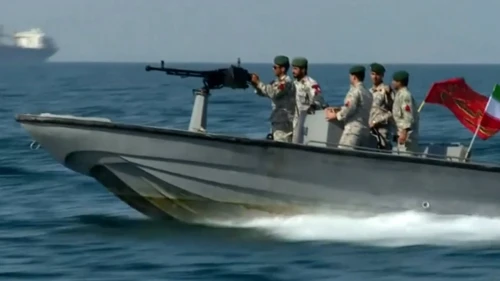
Among the goals of the exercise is boosting the land, air and sea forces’ capability to confront trans-regional threats, says Iranian Army Rear Admiral Habibollah Sayyari.

The development will drastically reduce flight times between Israel and Asian countries.

Troop presence will decrease from 5,200 troops to 3,000, according to Gen. Frank McKenzie, commander of U.S. Central Command.
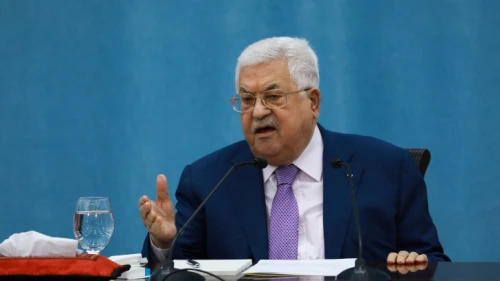
Ahead of the Arab League meeting in Cairo to discuss the normalization agreement, Palestinian Authority leader Mahmoud Abbas has dropped calls for action against the UAE from a draft resolution.

“I think he has done more trying to create peace between nations than most other Peace Prize nominees,” says Norwegian Parliament member Christian Tybring-Gjedde, who submitted the nomination.
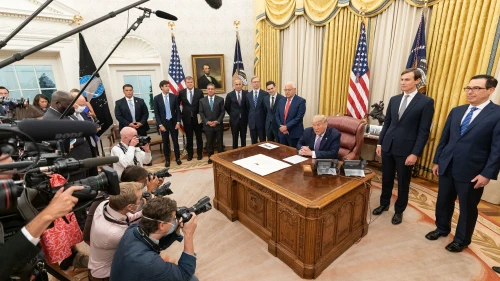
It will mark the first public meeting between an Israeli prime minister and an Emirati minister.
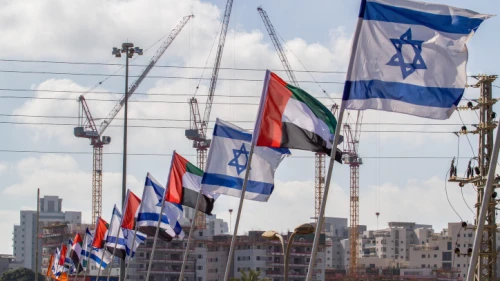
While the agreement has already borne fruit for Israel, some experts urge caution about overemphasizing the long-term benefits.

Rabbi Jonathan Markowitz has overseen two decades of extensive educational and social activity in the Ukrainian city, which only grew once coronavirus hit.

King Salman tells the U.S. president that Saudi Arabia wants a solution to the Palestinian issue based on the 2002 Arab Peace Initiative.
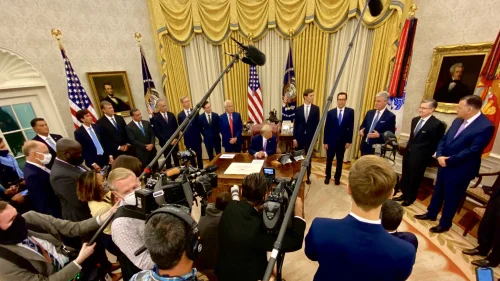
The visit is likely to be finalized after a date is announced for the signing ceremony of the Abraham Accord, the U.S.-brokered peace deal between Jerusalem and Abu Dhabi.

U.S. Rep. Jeff Duncan (R-S.C.) letter’s to the U.S. secretary of state, co-signed by 25 congressional colleagues, highlighted the fact that Ukraine’s travel ban has some exemptions.