
The Israeli response to the attempts to breach the Israeli-Gaza border as part of Hamas’s weekly “March of Return” protests has been effective, thwarting the possibility of masses of Gazans erasing the border and flooding into the Negev. The killings and woundings of rioters in the latest incident cut down the number of those actively trying to break through the border fence, and took the wind out of the sails of their friends who wanted to get in on the action.
Hamas has adopted simple, efficient methods. It started with an ecological terrorist attack in which thousands of tires were set on fire in the hope that the thick smoke would disguise the attempts to breach the border.
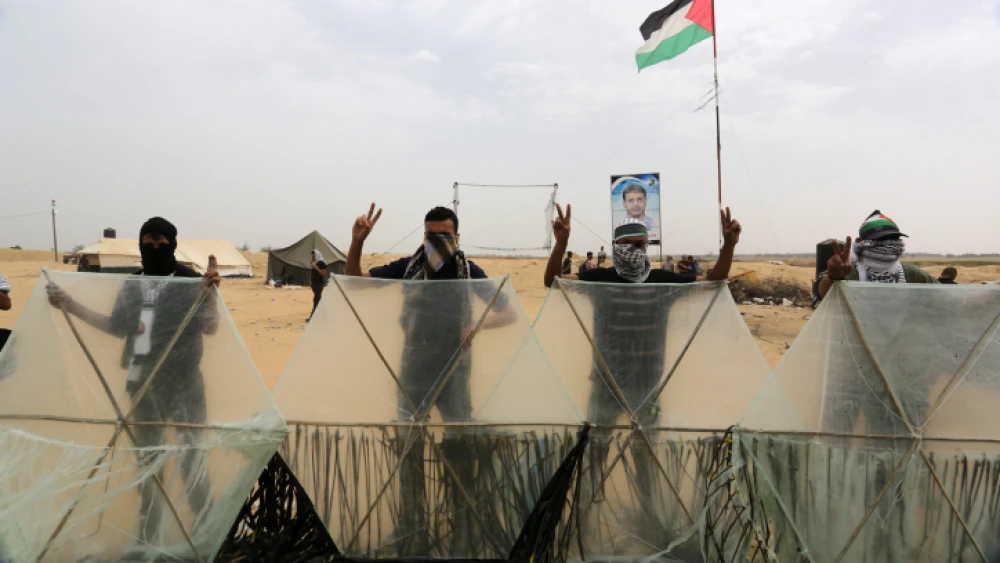
The smoke attracted media attention, but the infiltration itself was stopped. Now, Hamas is using the natural wind from the west to maneuver kites fitted with firebombs up and over the border. Although these kites are a primitive weapon, they cause fires in fields and woods, wreaking enormous havoc.
The government is standing by, helpless to stop this new tactic because obviously Israel cannot shoot the “children” who operate these kites—and the Hamas murderers dream of presenting us as killers of children. So Israel is paralyzed and allowing the enemy to burn its fields. On Sunday, we were informed that the Israel Defense Forces will have developed technology to combat the kites within two weeks. If it weren’t so personal, we might laugh.
Where did the idea of a proportional response come from? During “Operation Protective Edge” in 2014, Israel mostly allowed itself to respond to the attempts to murder its civilians merely by shooting down the missiles, wasting hundreds of millions of dollars in sophisticated Iron Dome missiles to take down Hamas’ primitive tin can explosives. The response did not put an end to the rocket fire. It was only toward the end of the operation, possibly because there were not enough defensive missiles, that the IDF started bringing down buildings in Gaza—and that did deter the enemy.
Back in 2002, “Operation Defensive Shield” in the West Bank, in which the IDF reoccupied the territory that had been ceded to our Fatah “partners” under the Oslo Accords, started even before 130 Israelis lost their lives to terrorist attacks in a single month (March 2002), and after a year-and-a-half of terrorist suicide-bombings and shootings that had killed nearly 1,000 people.
It is not children who are burning our fields; it is Hamas and its backers. Treating the kites as an isolated problem is self-delusion and a way of avoiding the real issue. Israel should aim its response to the kites at the entity that controls Gaza. Hamas needs to pay a price.
We could hurt the Gaza economy as a response to the attacks on our property. But it would be better first to put an end to the absurdity of Israel supplying electricity, water and aid to Gaza while people there are trying to murder our citizens, breach our border and burn our fields.
While all this is happening, Israeli captives and the bodies of two fallen soldiers are still being held in Gaza, and yet we continue to keep their power and water running. This insanity must stop. Why do we always take such pleasure in torturing ourselves before we start defending ourselves?
Boaz Haetzni is a publicist and a member of Hashomer Hachadash agricultural organization.