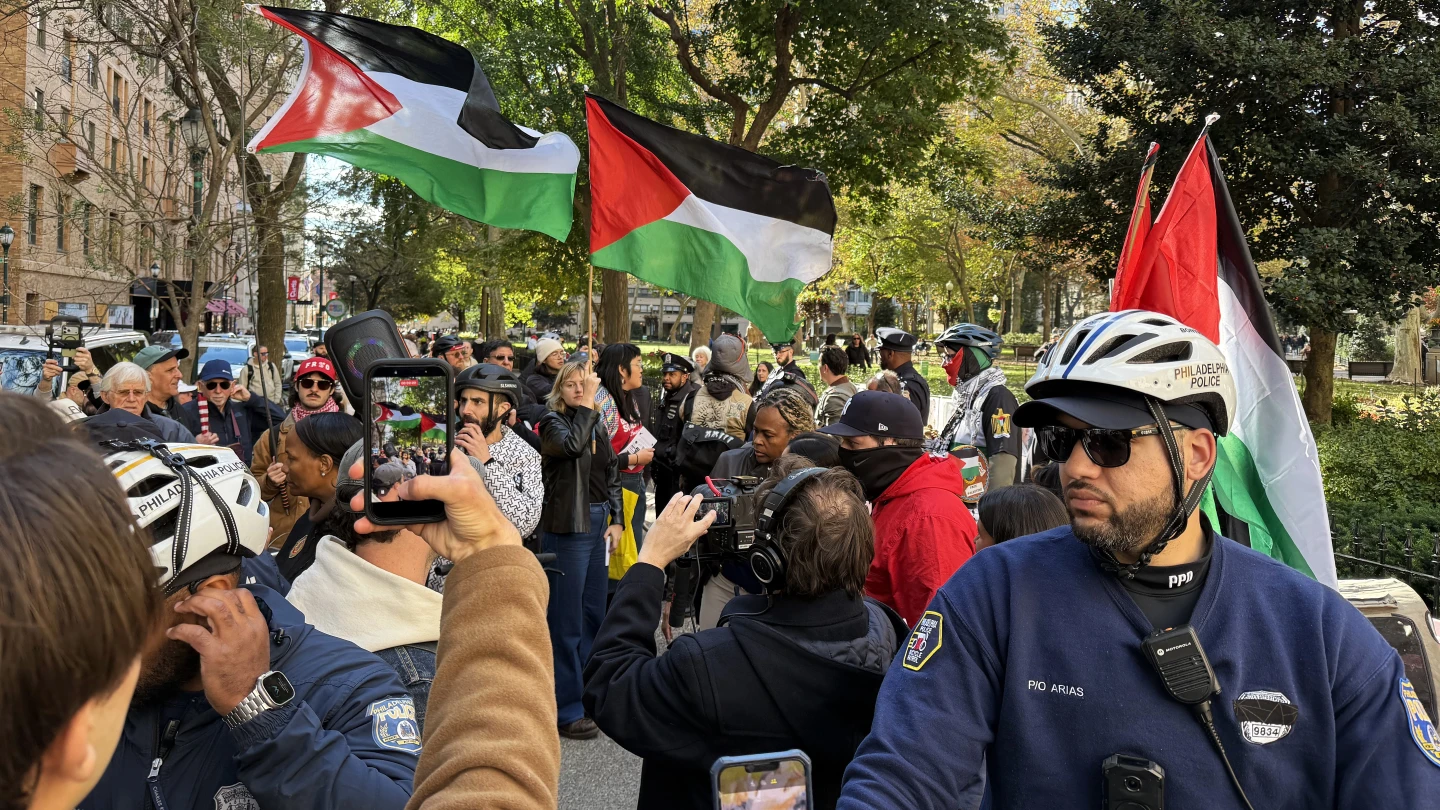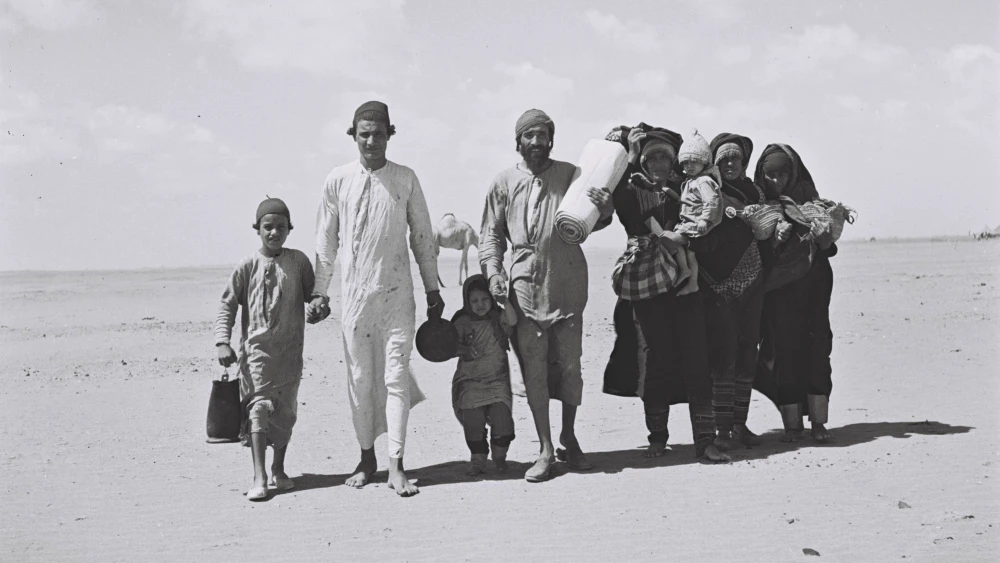

There is an extraordinary historical irony regarding the dates Nov. 29 and Nov. 30.
On Nov. 29, 1947, the United Nations voted to partition British Mandatory Palestine into Jewish and Arab states. The following day, violence erupted against Jews in Mandatory Palestine. Then, within days, anti-Jewish riots spread across parts of the Arab world.
In Aleppo, Jewish homes, businesses and synagogues were attacked. On Dec. 2, deadly riots erupted in Aden, leaving 82 Jews dead.
Ancient Jewish communities were being targeted because of a United Nations decision concerning Palestine.
Now consider the irony.
In 1977, the United Nations designated Nov. 29 as the International Day of Solidarity with the Palestinian People, deliberately selecting the anniversary of that partition resolution. Yet the persecution of Jews that followed receives remarkably little international attention.
Only in 2014 did Israel designate Nov. 30 as its official day commemorating the departure and expulsion of Jews from Arab countries and Iran.
The Palestinian nakba—Arabic for “catastrophe” or “disaster”—is widely discussed. The Jewish nakba—the uprooting of ancient Jewish communities across the Middle East and North Africa—remains largely absent from international discourse.
This is also ironic because anti-Jewish violence in the Arab world was extensively reported at the time.
In January 1948, the American Jewish Committee documented anti-Jewish violence following partition, including murders, destruction of property and threats against Jewish communities.
This was not historical interpretation decades later. It was contemporary reportage.
Persecution had begun long before 1947. The Farhud pogrom in Baghdad in June 1941 had already demonstrated Jewish vulnerability. But partition marked a significant escalation.
Jews who had never lived in Palestine and were citizens of other countries were increasingly treated as representatives of Zionism and subjected to collective punishment. The consequences were devastating.
Approximately 850,000 Jews left Arab countries in the following decades. Some were expelled; others fled persecution, violence, discriminatory legislation and economic restrictions. Iranian Jews experienced their own later upheavals.
These were ancient communities. Iraq’s Jewish history stretched back more than 2,500 years. Babylon was among Judaism’s great intellectual centers. Yemen, Egypt, Syria and North Africa possessed distinctive Jewish cultures woven into their countries’ histories.
Within decades, much of that Jewish civilization had disappeared. Where is the responsibility?
Some governments played unmistakable roles.
In 1950, Iraq enacted legislation demanding Jews relinquish their citizenship in exchange for permission to leave the country. In 1951, the government froze the property of those who had forfeited their nationality. In Egypt, particularly following the 1956 Suez crisis, Jews faced expulsions, arrests and confiscation of businesses.
These were deliberate state actions against Jewish populations. In many cases, such persecution, coercion and forced displacement warrant examination as ethnic cleansing.
In 1947, Jews were targeted following an international decision concerning a Jewish state. In 2023, Jews were targeted following a terrorist attack against that state.
Where are the acknowledgments from the governments responsible? Where is the accounting for confiscated homes, businesses and communal property? Where is the recognition that these countries destroyed an irreplaceable part of their own civilizations?
We regularly demand accountability for colonialism, discrimination and forced displacement. Why should the treatment of Jews in Arab countries receive less consideration?
These countries should acknowledge what happened, preserve Jewish heritage, open historical archives and recognize legitimate property claims.
There is another uncomfortable dimension to this story.
Israel is sometimes portrayed as a state created by the world to compensate Jews for the Holocaust. But Jewish history in the Land of Israel stretches back millennia. Modern political Zionism emerged decades before the Holocaust, with the First Zionist Congress convened in 1897.
Israel was not simply Europe’s compensation for the murder of 6 million Jews. Portraying it primarily as a response to European guilt risks obscuring the responsibility of European societies for centuries of antisemitism that culminated in the Holocaust.
A similar distortion can occur with Jews from Arab countries. Their departure is sometimes explained simply as a consequence of Zionism or Israel’s establishment, rather than through examination of persecution, expulsions and dispossession in those Jews’ countries of origin.
In both cases, attention shifts from those responsible for the persecution to the state where so many survivors found refuge.
Seventy-six years after partition, a troubling pattern reappeared. On Oct. 7, 2023, Hamas-led terrorists attacked Israel, murdering approximately 1,200 people and taking 251 hostages. Almost immediately, Jews worldwide faced increased antisemitism.
Britain’s Community Security Trust recorded 416 antisemitic incidents in the following week, before Israel’s major ground operation in Gaza. Why should Jewish students in London or synagogue congregants in New York bear responsibility for events in Israel?
Yet Jews were again treated as collectively responsible.
Another irony emerged when pro-Palestinian demonstrations were held internationally on anniversaries of Oct. 7. Many participants were protesting suffering in Gaza, rather than endorsing Hamas. Nevertheless, the timing raised painful questions about remembrance of those murdered and kidnapped.
In 1947, Jews were targeted following an international decision concerning a Jewish state. In 2023, Jews worldwide were targeted following a terrorist attack against that state. The circumstances differed, but the danger of collective blame remains.
I have written previously about a sculpture along Jerusalem’s Tayelet depicting the Zebib family from Yemen making their journey to Israel. For me, it represents both profound loss and extraordinary resilience.
Jewish refugees arrived in an impoverished young Israel that was simultaneously absorbing Holocaust survivors and other immigrants. Integration was difficult, yet they rebuilt their lives. Their descendants became integral to Israeli society.
Still, their success produced a troubling paradox: A new home does not restore the old one. Rebuilding Jewish life in Israel does not absolve those responsible for destroying it elsewhere.
The Palestinian nakba and Jewish nakba are different historical experiences. Recognizing one does not require denying the other. Both deserve acknowledgment.
The United Nations has institutionalized Nov. 29 as Palestinian Solidarity Day, yet created no comparable annual commemoration for Jews uprooted from Arab countries.
On Nov. 30, the world should remember the Jewish nakba: the families uprooted, the property confiscated and the cultural heritage lost.
Apologies may never come. Restitution may never happen.
But there is room in history to recall both events.