
Wars today are not fought only on the battlefield; they are fought on the airwaves, in newspapers, on social media feeds and in United Nations chambers. For Israel, communication has become the eighth front, as dangerous as the missiles from Lebanon or the tunnels under Gaza. It fuels antisemitism, incites anti-Christian hatred and undermines democratic societies worldwide.
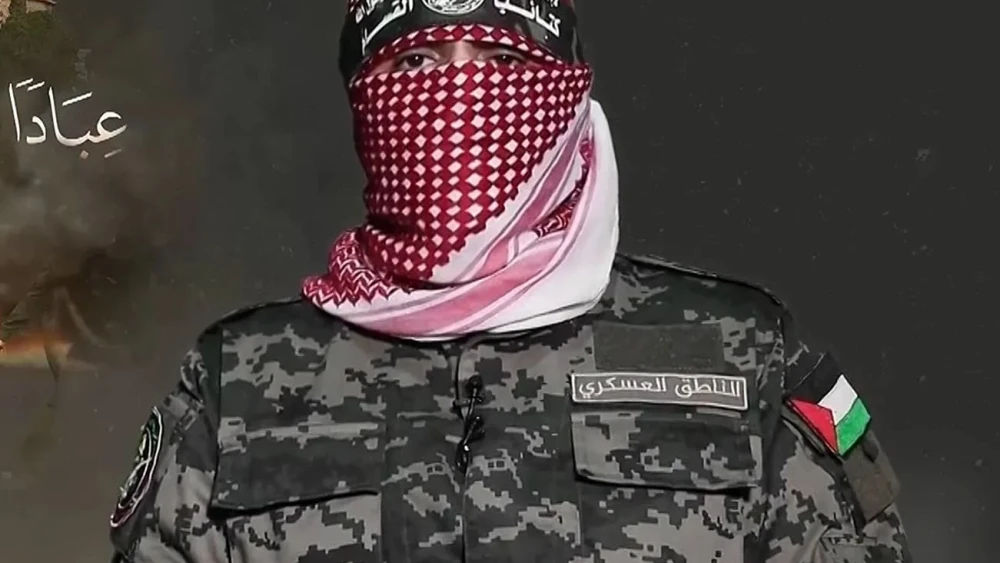
This week, Israel struck a decisive blow on that front by eliminating Hudahaifa Kahlout, better known as Abu Obeida, Hamas’s long-serving spokesman and propaganda mastermind. Since 2004, with his masked face and nasal, militant tones, he had been the voice of Hamas terror.
He announced the kidnapping of Gilad Shalit in 2006. He spread threats against hostages, most recently warning that captives would be used as human shields if the IDF entered Gaza. And above all, he built the narrative that criminalized Israel with the words “genocide” and “starvation,” a campaign amplified by Al Jazeera, Hamas’s bogus “ministries,” and an international press too willing to repeat Hamas figures without scrutiny.
For Hamas supporters and apologists, Abu Obeida was an icon. For Israel and the Jewish people, he was a symbol of the propaganda war that has poisoned world opinion. His elimination is a blow not only to Hamas’s military command but also to its global disinformation campaign.
At the same time, the United States sent a powerful signal of its own: Mahmoud Abbas will not be allowed into the U.S. to attend the U.N. General Assembly or Emmanuel Macron’s side meeting pushing for recognition of a Palestinian state.
It is not the first time Washington has barred a Palestinian leader. Yasser Arafat was once denied entry, only to deliver his infamous 1974 Geneva speech, pistol in one hand and olive branch in the other. But the symbolism here is critical.
Abbas, who only in June reluctantly muttered a word of criticism about Hamas’s Oct. 7, 2023, massacre, continues to fund terror through stipends to convicted attackers and the glorification of “martyrs.” He opposed the Abraham Accords with all his might. And though Hamas has eclipsed him in brutality, Abbas still hopes to secure statehood as a reward for decades of incitement.
Washington is right to draw a line. Terrorism cannot be rewarded with recognition. Abbas’s presence on the world stage, under U.N. applause, would hand legitimacy to the very ideology Israel is fighting to eradicate.
Israel now faces critical hours: hostage negotiations, renewed military operations in Gaza and delicate contacts with Arab states that could shape the region’s future. The propaganda war will continue—anti-Israel campaigns, automatic U.N. majorities, European recognition of “Palestine” as a state. But Israel is proving it will not only fight rockets and tunnels—it will also dismantle the lies that sustain them.
By killing Hamas’s propaganda chief and by supporting U.S. moves to hold Abbas accountable, Israel and its allies are reminding the world: the age of rewarding terror must end.
As the roulette wheel of Middle Eastern politics continues to spin, the stakes are clear. There can be no peace built on propaganda, incitement and blood money.