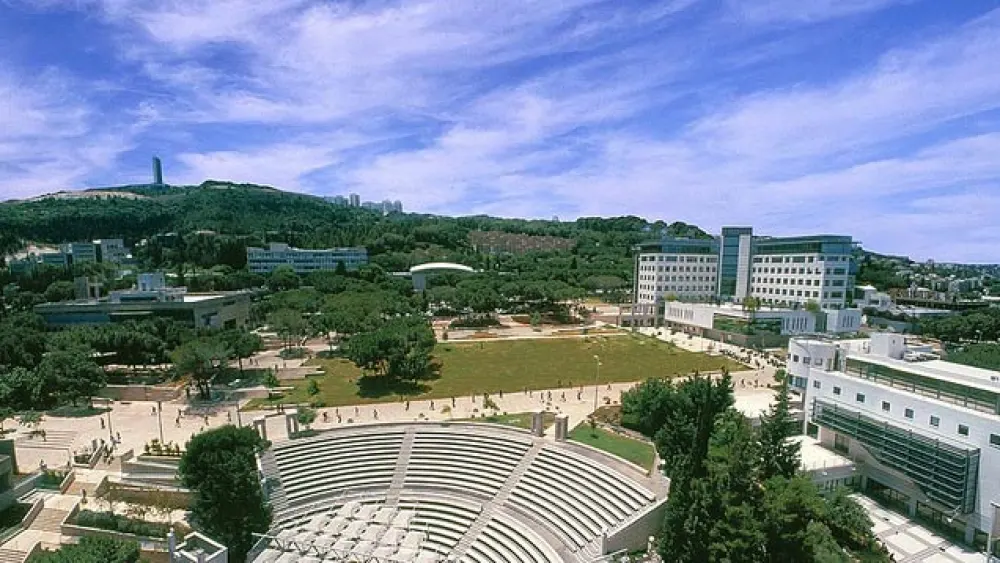
CSRankings, the leading metrics-based ranking of top computer-science institutions around the world, has ranked the Technion–Israeli Institute of Technology No. 1 in the field of artificial intelligence in Europe (and, of course, in Israel), and 15th worldwide.
In the subfield of machine learning, the Technion is ranked 11th worldwide.
The data used to compile the rankings is from 2016 to 2021.
An innovation for the Technion’s prowess is the Machine Learning and Intelligent Systems (MLIS) research center, which aggregates all AI-related activities.
Currently, 46 Technion researchers are engaged in core AI research areas with more than 100 researchers in AI-related fields: health and medicine, autonomous vehicles, smart cities, industrial robotics, cybersecurity, natural language processing, FinTech, human-machine interaction, and others.
The MLIS is co-directed by two leading AI researchers: Professor Shie Mannor of the Andrew and Erna Viterbi Faculty of Electrical and Computer Engineering and Professor Assaf Schuster of the Henry and Marilyn Taub Faculty of Computer Science.
The center has four main goals: (1) establishing the Technion as a top-five university in the field of AI worldwide; (2) pooling resources, and recruiting researchers and students from Technion departments to advance and conduct joint research in the field; (3) connecting Technion researchers with relevant parties in the industry, especially tech companies and other organizations that generate Big Data; (4) establishing close research collaboration with other prominent research institutes in the AI field in Israel and the world.
In May 2021, the Technion entered a long-term collaboration with American software giant PTC, under which the company will transfer its Haifa research campus to the Technion, to advance joint research in AI and manufacturing technology.
PTC joins several other organizations that collaborate with the Technion in these fields, including the technological universities of Lausanne (Switzerland), Eindhoven (Netherlands), Munich (Germany), and the Paris Polytechnique (France) in Europe, as well as Cornell Tech, home of the Jacobs Technion-Cornell Institute, Waterloo University, and Carnegie Mellon University, which operates the largest center for AI and robotics in the United States.