
A liter of extra-virgin olive oil now costs around £8 in Britain, about $12 in America, making its ancient description as “liquid gold” seem remarkably apt. Olive oil, once prized by the ancient Greeks as “liquid gold,” remains remarkably valuable more than 2,000 years later.
Olive oil has also found itself caught up in contemporary political disputes. Britain recently announced plans to ban imports from Israeli settlements in Judea and Samaria, raising questions about the potential consequences for Jewish and Arab businesses and livelihoods in the region.
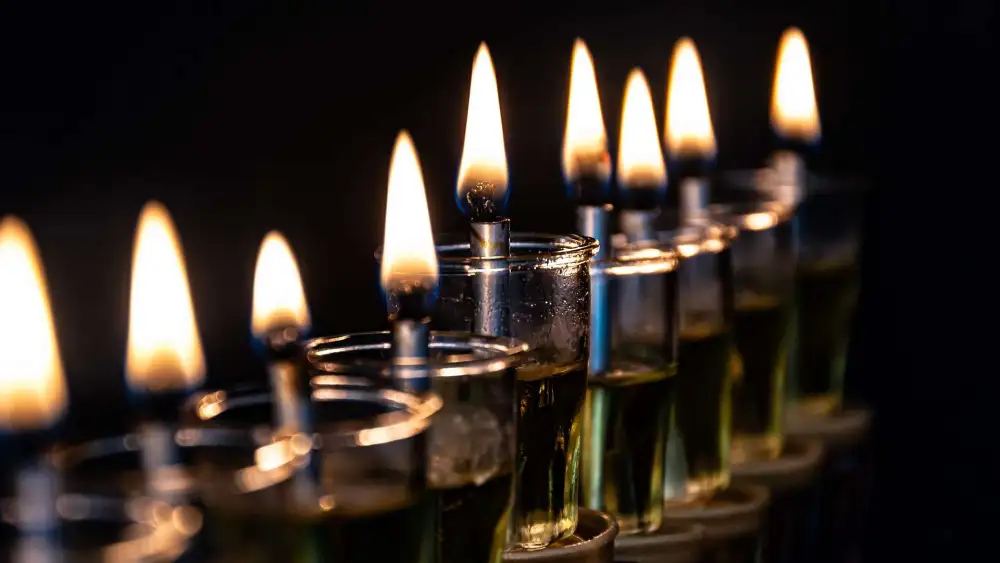
This month, Jewish families around the world will take that same commodity and use it to illuminate their Chanukah lamps. We know the story of the brave priests in the Judean hills, their extraordinary victory over the Seleucid Greeks, the recapture of the Temple and the flask of olive oil that burned for eight days. But there may be a deeper significance to the oil itself, which tells us something about what the Maccabees were fighting for.
Olive oil was a staple of ancient Greek life. It was used in cooking, medicine and lighting. An olive branch was the symbol of ancient Athens, and olive oil continues to saturate Mediterranean cuisine to this day. But its cultural significance loomed even larger in the ancient Greek world through one particular institution—what the Greeks called a gymnasium, the hub and heart of every Greek city.
These gymnasiums were schools, stadiums, gyms, universities, clubs and cultural enclaves rolled into one, devoted as much to the human body as to the human mind. They were the sites and beacons of Greek culture throughout their empire. These gymnasiums were almost shrines to bodily strength and physical prowess in a civilization whose gods themselves were imagined in human form.
There was one ingredient of these gymnasiums that is often overlooked: olive oil.
Athletes smothered their bodies with oil before and after exercise, making their muscles gleam and glow. Vast quantities were supplied by cities and wealthy benefactors, stored in special vats and special chambers. A fascinating paper published last year by researchers at the Academy of Athens, Greece’s national academy, named after Plato’s ancient institution, records that a winner of a four-horse chariot race could receive an astonishing 5,040 liters of olive oil as a prize.
Judaism saw things differently. God, we know, is beyond image or form; Judaism gave greater weight to listening than to seeing, words and deeds than to aesthetics or athletics. This did not mean scorning the body. Jews, of course, also used olive oil for cooking, hygiene and enjoyment. But in Jewish thought and worship, oil acquired another significance.
It illuminated homes and places of study, allowing people to learn and live by its light. It fueled the Holy Temple’s lampstand. And, blended with fragrant spices, it was used to anoint its religious and political leaders, kings and High Priests.
Their greatest purpose is to shine light beyond ourselves.
Here, the contrast sharpens. Whereas the Greeks smothered their bodies in olive oil, using it as a balm for their muscles, the Jewish ceremony of anointing centered on the head. Only a small quantity of olive oil was required, rather than lathering the entire body. Indeed, in biblical poetry, oil is often described as being poured specifically over the head.
Why the head? Perhaps dipping olive oil onto it represented the transformation of a human being into a living lamp. Oil placed at the seat of thought and above the eyes signified a responsibility to see ahead and illuminate a path for others. Kingship and priesthood—ancient positions of leadership—were not invitations to bask in personal brilliance, but obligations to guide and serve.
So, the Greeks used olive oil to make their bodies shine. The Jews placed it upon the head and used it to fuel lamps that brought light to the eyes. The oil was not there to make the leader shine, smothering him; rather, it was there to make him a symbolic lamp of sorts—a source of light for others.
In the years leading up to the Maccabean revolt, Greek culture had become increasingly popular among Jerusalem’s wealthier Jewish classes. A Greek-style gymnasium was even established in the shadow of the Temple.
According to the Second Book of Maccabees, some priests neglected their sacred duties to rush to athletic competitions. The contrast was extraordinary: The very priests entrusted with pouring olive oil into the Temple’s menorah to light God’s sanctuary were instead smothering their own bodies in that same oil, seeking to make themselves shine rather than bring light to others.
When the Maccabees revolted and reclaimed the Temple, they took that same liquid gold—the olive oil so prized in Greek culture and rekindled its lamps. Oil that had been smothered over athletes’ muscles now shone light outwards—from the sanctuary to the world beyond. It was less a balm for their brawn than fuel for their lamps. The Maccabees had fought with their bodies, but bodily power was not the purpose of their struggle. It was a means.
More than 2,000 years later, olive oil remains a valuable commodity, whether in Mediterranean kitchens, on supermarket shelves or in the hills of Judea. The Greeks awarded thousands of liters of olive oil to celebrate athletic victory. The Jews celebrate a tiny flask. The Greeks poured oil over themselves. The Maccabees poured their energies into something greater than themselves. The human body, they knew, was not their temple.
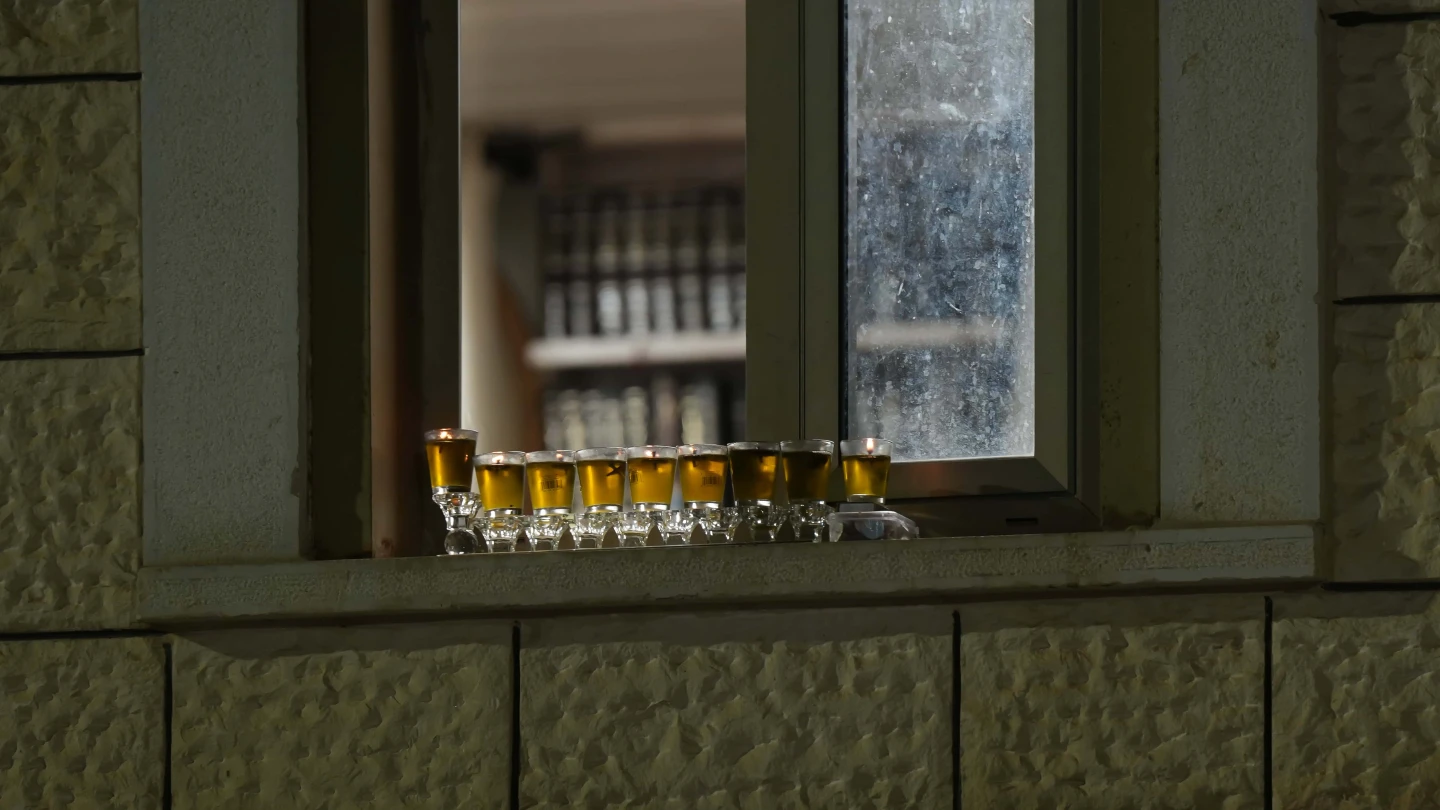
Our Chanukah lights still glisten on winter windowsills in bright contrast to the great oil jars of the Greek gymnasium. The religious and moral significance of olive oil may be one of the lesser-known themes of the otherwise famous winter holiday.
Their flames remind us that our own bodies, strength and possessions are not ends in themselves. Their greatest purpose is to shine light beyond ourselves.
In memory of his mom, who passed away this year in her early 50s, Gavriel Cohn wrote “Snapshots of the Spirit,” a short survey of figures from Tanach. To receive a free copy, email the author: gavrielcohndt@gmail.com.