Newsletter
Newsletter Support JNS

Israel to appoint female ‘halachic’ advisers for first time

The decision by the Religious Services Ministry will enable women to serve as community spiritual leaders, including in communities without a rabbi, with state support.

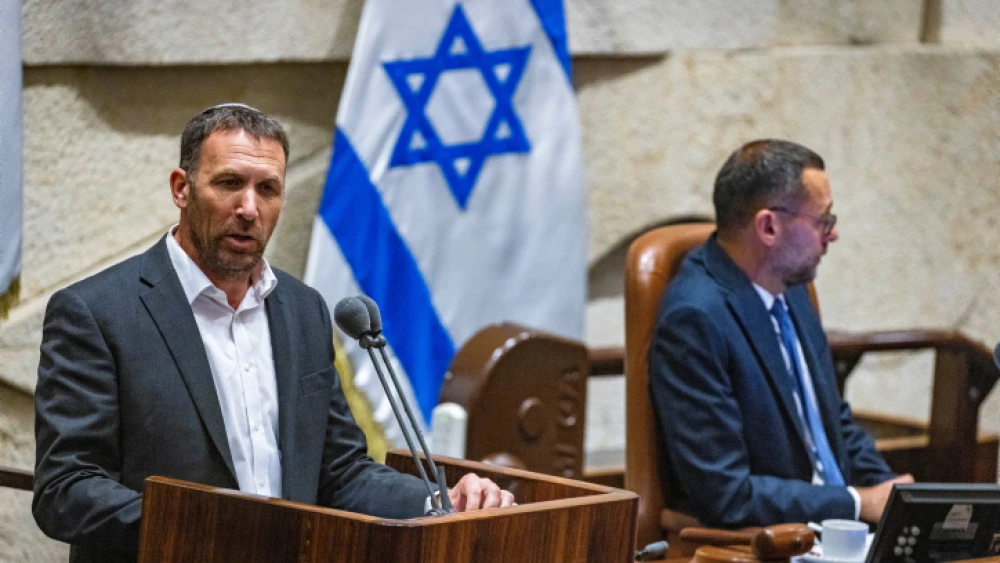
Then-Deputy Religious Services Minister Matan Kahana addresses the Knesset plenum, May 16, 2022. Photo by Olivier Fitoussi/Flash90.

Israel’s Religious Services Ministry has announced it will open slots for female halachic (Jewish law) advisers, who will perform similar duties to community rabbis.

The revolutionary move will enable women to serve as spiritual leaders, including in communities without a rabbi, with the encouragement of the state.

In recent years, women have increasingly served as halachic advisers, providing counseling to other women, in specific communities. The vast majority of these advisers have provided these services voluntarily or received payment from the community itself, as opposed to community rabbis who receive state funding.

For the first time, the state will recognize and fund the majority of the advisers’ work as integral to the community. The goal is to fund the hiring of halachic advisers for 21 communities to provide religious women with female halachic figures who can offer advice on personal and sensitive issues.

In a statement announcing the move, Deputy Religious Services Minister Matan Kahana clarified that the move was aimed at making women an integral part of halachic instruction in the religious space.

The ministry said the move will “bolster guidance in the field of family purity, from a view that sees this as a vital component in strengthening the family unit” and take on some of the costs of employing them out of a “desire to bring about the integration of women in the halachic-community space.”

This article first appeared in Israel Hayom.

“What started a little more than 30 years ago as basic relations of seller and buyer has evolved dramatically to the highest level,” said former Israeli Ambassador to India Ron Malka.
Alan Meltzer praised the Jewish-non-Jewish collaboration behind Stuttgart’s “Anti-Anti 2.0” initiative and held talks with leaders in Baden-Württemberg.
The U.S. secretary of state will travel to the UAE, Kuwait and Bahrain to discuss regional priorities, including the U.S. agreement with Tehran and efforts to secure the Strait of Hormuz.
“It cannot be overstated that ISIS continues to pose a threat to U.S. interests, both domestically and abroad,” said Reid Davis, the FBI Special Agent in Charge in North Carolina.
“He was a giant of a man who helped shape the U.S. economy for decades under presidents of both parties but was always honest in acknowledging his mistakes,” his widow Andrea Mitchell told NBC.
Rapid, tech-driven strikes killed Tehran’s top commanders in seconds and secured air superiority in hours, the Rafael chair and former minister said.
Benny Gantz, JNS editor-in-chief Jonathan S. Tobin, Gilad Erdan, Mosab Hassan Yousef, Nissim Black and leading voices in security, diplomacy, media, law and Jewish communal affairs headline the summit’s third day in Jerusalem.

