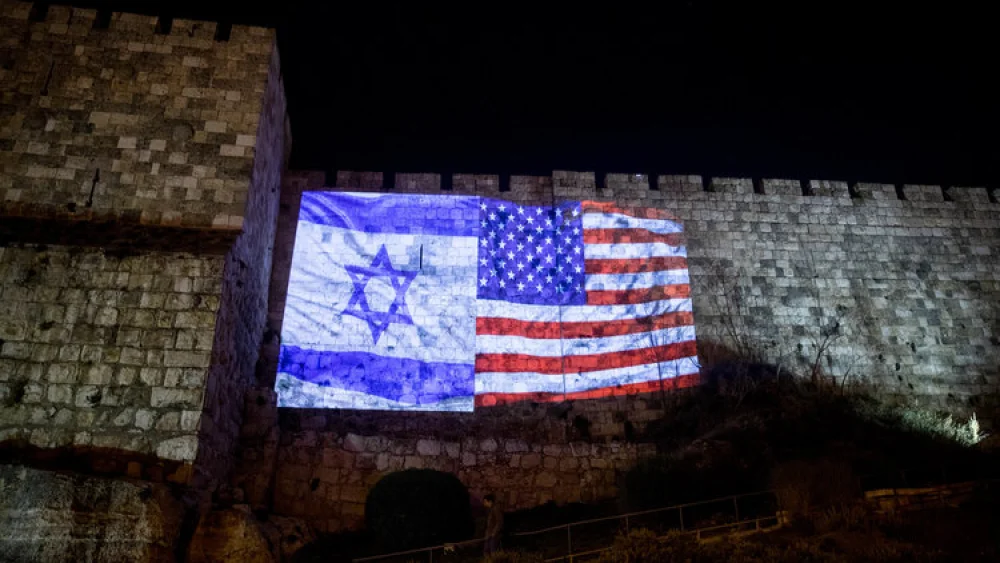

While it is an instinct for many to overlook occasions like Jewish American Heritage Month as largely ceremonial, this year’s event comes at a particularly significant juncture for the relationship between American Jewry and Israel.
With the possibility of a prime minister rotation between Yamina leader Naftali Bennett and Yesh Atid leader Yair Lapid reportedly back on the table following the ceasefire between Israel and Hamas in Gaza, Israel could avoid a fifth election in a period of two-and-a-half years. Or, if recent history continues to repeat itself, the country’s political impasse might persist.
Despite the uncertainty, there remains a degree of encouraging news in the Israel-American Jewry relationship. In January 2020, a Ruderman Family Foundation survey found that 80 percent of American Jews have a favorable and supportive view of Israel, regardless of which politician is in power. Subsequently, a November 2020 poll commissioned by our foundation following the U.S. election found that 91 percent of Israelis believed that President Joe Biden’s administration would support Israel.
Our research was reinforced this month in a study released by the Pew Research Center that found that 82 percent of American Jews believe caring about Israel is either “essential” or “important” to what being Jewish means to them, and that 58 percent are at least somewhat attached to Israel. This drives home the reality that although some tensions exist in the Israel-American Jewry relationship, Israel remains a central component of Jewish life and Jewish identity in the United States. Additionally, only 10 percent of American Jews support the movement to boycott Israel, and 43 percent report that they have not even heard much about BDS.
At the same time, the points of tension should not be ignored. The diverse opinions of the American Jewish community, both politically and religiously, are not necessarily adequately represented by U.S. Jewish establishment organizations—the same organizations that routinely interface with the Israeli government. Meanwhile, today’s constant political turnover in Israel sets aside important programs that American Jewry has initiated with the Israeli government, including in the area of fostering religious pluralism.
There also remains a substantial divide between the worldviews of the Israeli electorate and the American Jewish community. Current Israeli public opinion leans center-right, while American Jews lean center-left. If haredi parties become part of Israel’s next governing coalition, the future government could repeat past ministers’ demonization of large segments of the U.S. Jewish population, particularly Reform Jews. It is not only offensive, but also a poor strategic move for Israeli leaders to make statements that damage Israel’s relationship with American Jewry.
More broadly, the challenges in the Israel-American Jewry relationship long predate Israel’s current political impasse in Israel. The discourse about Israel’s relationship with the United States and its ties with American Jewry seems to resemble train tracks: two parallel lines that connect the same places but never meet. Those lines are the public discourse about the relationship between the two countries, and the public conversation about the relationship between the world’s two largest Jewish communities. Rarely do we hear of the connection between these relationships; it is as if they are unrelated. This artificial separation is a strategic error since it conceals, and sometimes distorts, the truth. The truth is simple: The American Jewish community plays a vital role in the relationship between the countries, and it is impossible to have an honest discussion about U.S.-Israel bilateral relations without accounting for this community.
Israeli agents of change tend to talk about the relationship with U.S. Jewry in the context of Jewish peoplehood and philanthropic donations to various projects—in welfare, education and other fields. Simultaneously, the media focus on government-level cooperation between Washington and Jerusalem on issues ranging from Iran’s aspirations to its nuclear program, to trade deals and visa waivers. Ultimately, the dichotomy between the two dialogues is absurd, as one cannot talk about Israel’s relationship with the United States without talking about the American Jewish community.
Charting a better course in Israel-American Jewry ties requires a paradigm shift in the understanding of that relationship—not as a bilateral one, but as a “relationship triangle” between Israel, the U.S. government and the American Jewish community. Cooperation within the triangle is crucial because a dependency and a mutual relationship exist between the three corners; together, they form a much more powerful entity.
Moving forward, it is crucial for Israel to harness bipartisan support in the United States, which can bring Israel and American Jewry closer together. Israelis need to internalize the importance of the American Jewish community as a valued strategic partner in the context of Jerusalem’s relationship with Washington. Every aspect of this relationship triangle matters and affects all three corners.
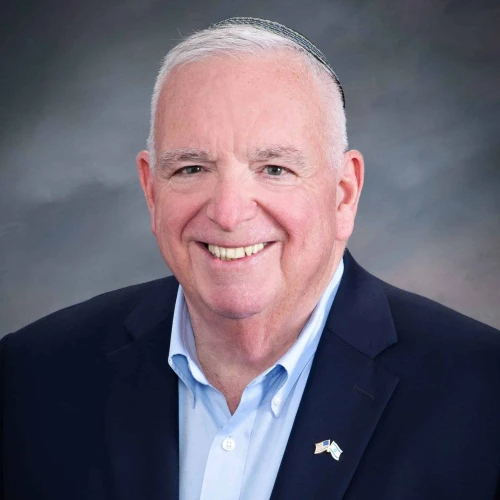
Jay Ruderman is president of the Ruderman Family Foundation.