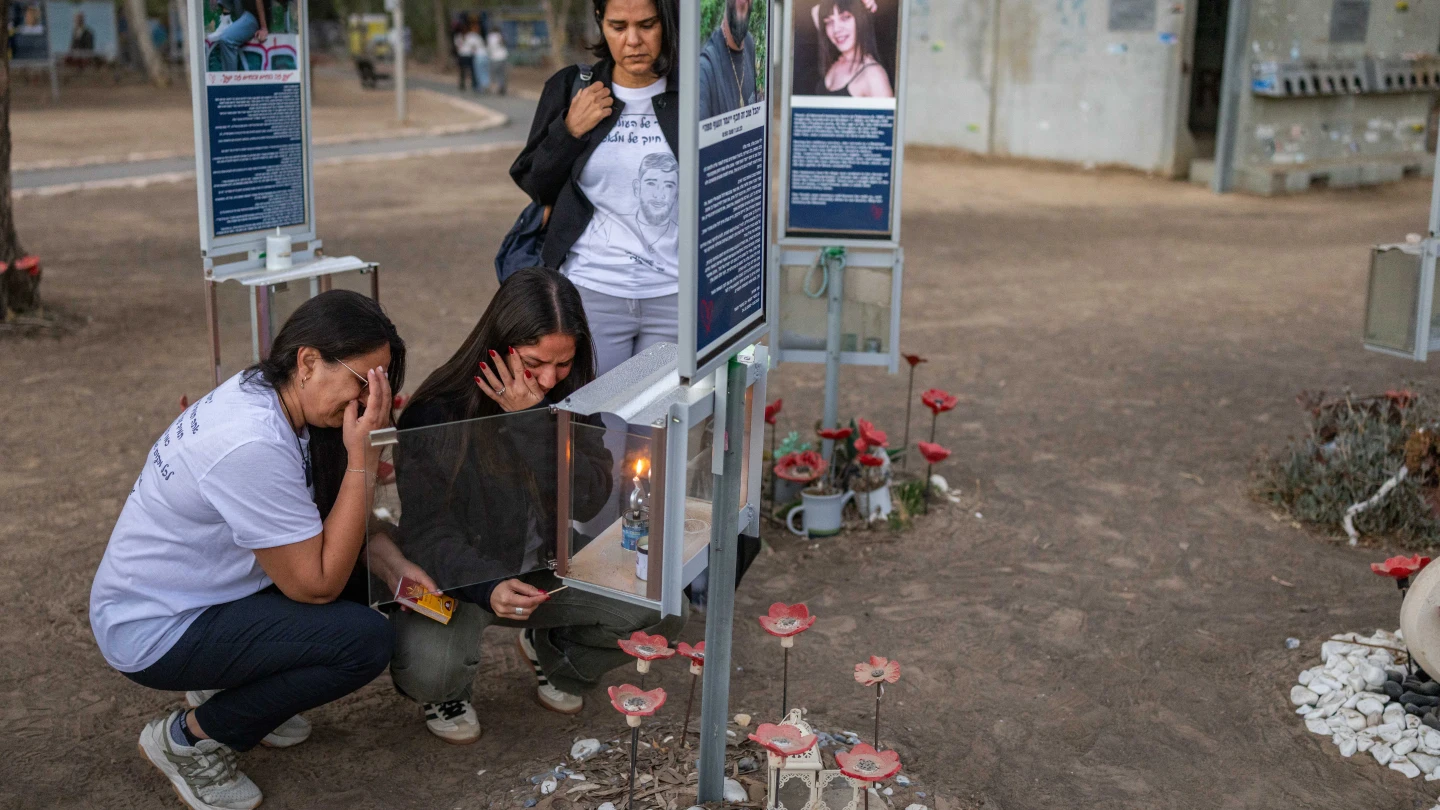
On the third anniversary of the Oct. 7, 2023, Hamas-led attack—the deadliest against Jews since the Holocaust—Diaspora organizations in North America and Europe say they are working to ensure that the Jewish future is shaped by identity and unity rather than fear.
Communal leaders described to JNS a long-term challenge that extends beyond protecting Jewish institutions: sustaining visible Jewish life, strengthening ties with Israel and empowering the next generation to lead.
“External pressure tests us. Jewish renewal will define us,” William Daroff, CEO of the Conference of Presidents of Major American Jewish Organizations, told JNS.
“Young Jews are already organizing, leading and building community,” Daroff said. “Our institutions must do more than praise them. We must trust their judgment, give them meaningful responsibility and let them shape what comes next.”

Communal organizations are responding through stronger coordination and security preparedness. Confronting antisemitism and protecting communities have become “central, permanent responsibilities of communal leadership,” shaping education, public events, budgets and relations with governments, the European Jewish Congress told JNS.
SACC by EJC, the organization’s Security and Crisis Center, supports that work through threat assessments, training, crisis management and cooperation between Jewish communities and law enforcement, the EJC said.
Daroff described a parallel effort to strengthen communication among Jewish communities worldwide. As inaugural chair of J50, established in partnership with Israel’s foreign minister to bring Diaspora leaders together, he said regular contact helps participants share perspectives, align priorities and coordinate action.
“Advocacy cannot end antisemitism on its own,” Daroff said. “It can move governments, strengthen protections, and make it harder for institutions to look away.”
“When we coordinate, our voices carry further and our advocacy has greater impact,” he added.
But communal leaders cautioned that stronger protection must not come at the expense of Jewish confidence and belonging.
“The normali[z]ation of airport-style security at Jewish schools, kindergartens and synagogues is particularly troubling,” the EJC told JNS. “These measures save lives, but they also risk teaching children that being Jewish means constantly needing protection from someone who wants to hurt them.”
“Growing up behind guarded entrances can gradually erode their sense of belonging and confidence in a future within their own community,” it added.
The EJC said governments have provided vital protection, but official solidarity is not always matched by society’s willingness to confront antisemitism.
“Communities cannot be expected to shoulder the burden alone, nor can guarded schools and synagogues become Europe’s accepted and only answer to antisemitism,” the group said.
“Protecting Jewish buildings must be accompanied by defending Jewish belonging, including against the acceptance and normali[z]ation that Jews should be targeted because of events relating to Israel,” it added.

In New York, police data released on Oct. 6 showed that anti-Jewish hate crimes accounted for 245 of the city’s 463 confirmed hate crimes during the first nine months of 2026, or approximately 53%. The anti-Jewish total represented a 1.2% increase over the 242 recorded during the corresponding period in 2025.
Rabbi Abraham Cooper, associate dean and director of the Global Social Action Agenda at the Simon Wiesenthal Center, told JNS that American Jews were unprepared for the convergence of rising antisemitism before Oct. 7 and the hostility that followed the attacks.
Cooper argued that established Jewish organizations cannot counter the threats alone. He called for protests and sit-ins modeled on the Soviet Jewry movement, alongside legal challenges to discrimination in professional life.
“We need all hands on deck,” he said.
He also urged Jews to enlist their neighbors and professional colleagues in confronting antisemitism, while warning against retreat from public life that leaves communities with “no clout in either major political party in the United States.”

Daroff told JNS the attacks and their aftermath underscored the reciprocal nature of solidarity between Diaspora Jews and Israel.
“October 7 made clear that solidarity runs both ways,” he said. “We stood with Israel through the war and the profound tragedy of October 7. Israelis, too, have watched Jewish communities around the world confront rising antisemitism, Jew-hatred and violence.”
“Three thousand five hundred years of Jewish history teach us a hard truth: at the end of the day, we can count only on ourselves,” Daroff added. “We are only as strong as we are united.”
For Cooper, responding to external threats must also involve strengthening Jewish identity. He urged Jews not to “let the narrative of our enemies dictate how we behave” and emphasized that young people must understand Jewish values and Israel’s centrality to the Jewish people.
“That doesn’t mean a blank moral check for anything,” he said.
The EJC likewise argued that resilience must serve a larger purpose than enduring heightened security.
“Fear has changed Jewish life, but renewed determination has the greater potential to shape its future,” it said.
“The goal must be a thriving Jewish life in which young people feel they belong and can build a future,” the group said. “Europe’s success will be measured by whether Jews can live openly and confidently, without fear or having to justify their identity.”