
“Nothing will happen because there is nothing.”
Benjamin Netanyahu said those words back in 2017, at the beginning of the judicial investigation that would drag him into a trial lasting six and a half years. On Wednesday, he was dramatically vindicated, at least in large part.
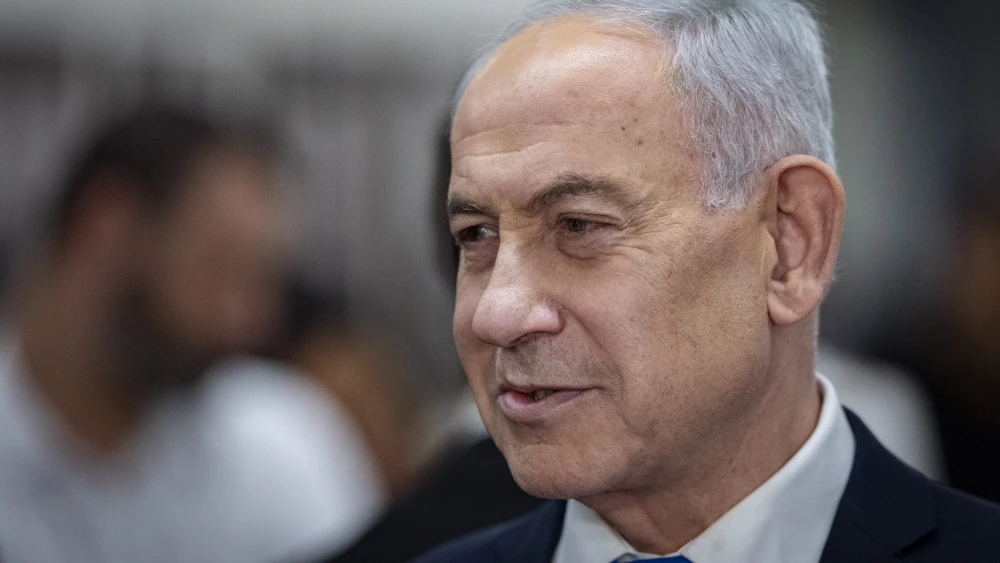
Emotional, his voice hoarse from the dramatic turn of events, Netanyahu suddenly appeared as he truly is: a man who has endured a decade of lies and judicial persecution, demonized and hounded by accusations that have inflicted deep wounds on his life and that of his family, while dividing the country to which he has devoted his life.
And now he repeats it: “Lo yihe klum, ki ein klum.” Nothing will happen because there is nothing.
“I have not been a prime minister, but defendant number one,” he said.
The entire spectacle has been surreal.
Netanyahu entering and leaving a courtroom while missile-warning sirens sound outside. Asking the court’s permission to attend Cabinet meetings while the fate of the country hangs in the balance. Requesting a day off for a visit by U.S. President Donald Trump. Being reprimanded by the media for spending too much time in discussions with Indian Prime Minister Narendra Modi.
And having to seek permission to travel to the United Nations and the White House, with the court arrogantly granting or denying his requests.
“Corrupt.”
That is how Netanyahu has been portrayed in newspapers around the world, particularly those that pride themselves on defending due process.
He has paid a judicial price for being conservative, Western-oriented and forced to wage a difficult defensive war following the Hamas massacre of Oct. 7, 2023.
The judges cast doubt on the charges
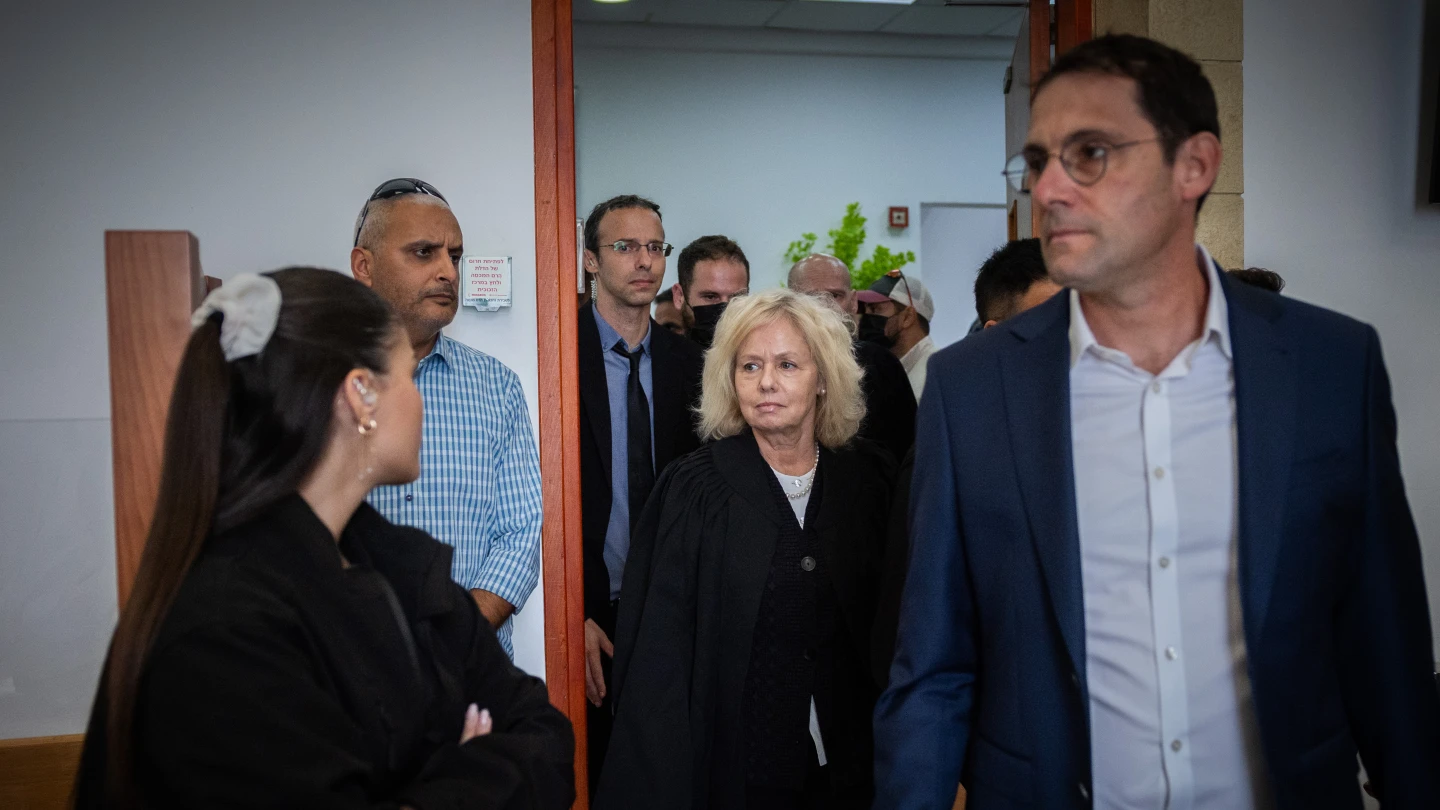
Wednesday’s hearing at the Jerusalem District Court marked a dramatic turning point.
In a hearing lasting just 10 minutes, the judges overseeing Netanyahu’s corruption trial urged Attorney General Gali Baharav-Miara to reconsider the charges against the prime minister, expressing serious doubts about the prosecution’s chances of securing convictions in two of the three cases.
Judge Rivka Friedman-Feldman proposed dropping the charges in Case 4000, the Bezeq-Walla affair, and raised serious questions about the legal basis of Case 2000.
The most serious accusation of corruption was at the heart of Case 4000. As communications minister, Netanyahu allegedly granted regulatory benefits to Shaul Elovitch, the controlling shareholder of telecommunications company Bezeq, in exchange for favorable coverage on the Walla news website.
Friedman-Feldman told the attorney general that the bribery charge presented “considerable difficulties,” relying largely on inconsistent testimony. She also expressed doubts about the breach-of-trust allegation and urged the prosecution to reconsider its position.
Amid genuine tears on the left and jubilation among those who have steadfastly maintained Netanyahu’s innocence, the judges themselves have now cast serious doubt on the prosecution’s central allegations.
The same applies to Case 2000, in which Netanyahu was accused of fraud and breach of trust.
Prosecutors alleged that, in exchange for more sympathetic media coverage from Arnon Mozes, publisher of Yediot Aharonot, Netanyahu had promised to curb Israel Hayom, a rival newspaper considered friendly to him.
Here, too, Friedman-Feldman expressed “serious doubts as to whether the conduct described in the indictment constitutes an offense,” noting the weakness of the connection between the evidence presented and the alleged wrongdoing.
That leaves Case 1000, involving gifts of cigars and champagne.
The judges indicated that most of the evidence in that case had already been presented and suggested that the proceedings should be brought to a conclusion, either through an agreement or a verdict.
Friedman-Feldman stressed that the judges’ observations were not a formal ruling, but rather reflected their assessment of the evidence heard thus far.
Nevertheless, the significance of their intervention cannot be overstated.
A decade of damage
The decision now rests with Baharav-Miara, who succeeded Avichai Mandelblit, the attorney general who originally indicted Netanyahu.
She told the court that the prosecution would examine the judges’ observations and remained open to concluding Case 1000 through either a verdict or an agreement reflecting the nature of the alleged offenses.
The only thing clear about her is that she regards Netanyahu as a political enemy. Yet it will be difficult for her to persist with accusations that the judges themselves have now called into serious question.
It will also be difficult to restore public confidence in the judiciary.
As Netanyahu himself has said—and this applies to everyone—it is unacceptable for an entire country to be thrown into turmoil on the basis of a subjective and far-fetched indictment.
Responding to Wednesday’s dramatic courtroom developments, Netanyahu declared: “Today, the trial has fallen.”
He described the proceedings as politically motivated, accusing those behind them of causing years of suffering, deepening divisions within Israeli society and contributing to repeated elections.
Calling for the trial to end immediately, he also extended an appeal for national reconciliation.
“Precisely on this day, I extend my hand for reconciliation. We must unite to secure Israel’s future.”
Netanyahu has not sought revenge. On the contrary, he has returned to emphasizing the need for a national unity government in the face of the Iranian threat.
But the public, having watched enormous sums spent and an entire decade consumed by legal proceedings, having endured the humiliation before the world of seeing its prime minister accused of corruption, and now confronting the politicization of its prosecutors, is roaring with anger.
People are furious at the thought that the country, its media, its institutions and its economy have all been made to dance to a tune that undoubtedly also influenced the elections. Above all, they are angry at the deep divisions inflicted on Israeli society and the corruption of public information brought about by this farcical trial, which has poisoned political discourse and undermined trust in the country’s institutions.
Those who supported the prosecution should at least apologize. That would be a first step toward restoring some measure of mutual trust between political camps that face common challenges.
Ten years of investigations and legal proceedings against a prime minister, with the most serious accusations now hanging by a thread and the remaining case involving cigars and champagne.
Someone must answer to history for this.