Israel’s coronavirus death toll rose by five people to 252 on Sunday, with just 24 new COVID-19 cases being reported, according to the Israeli Health Ministry.
The country’s current total number of COVID-19 cases stands at 16,477, but only 4,795 people are still sick. Of those, the ministry confirmed that 74 are in serious condition, with 65 on ventilators.
Over the past 10 days, Israel has averaged just 53 new cases per day and has not tallied over 200 new cases in a 24-hour period in over two weeks. However, according to ministry officials, this week will be critical in determining whether Israel can continue to roll back restrictions.
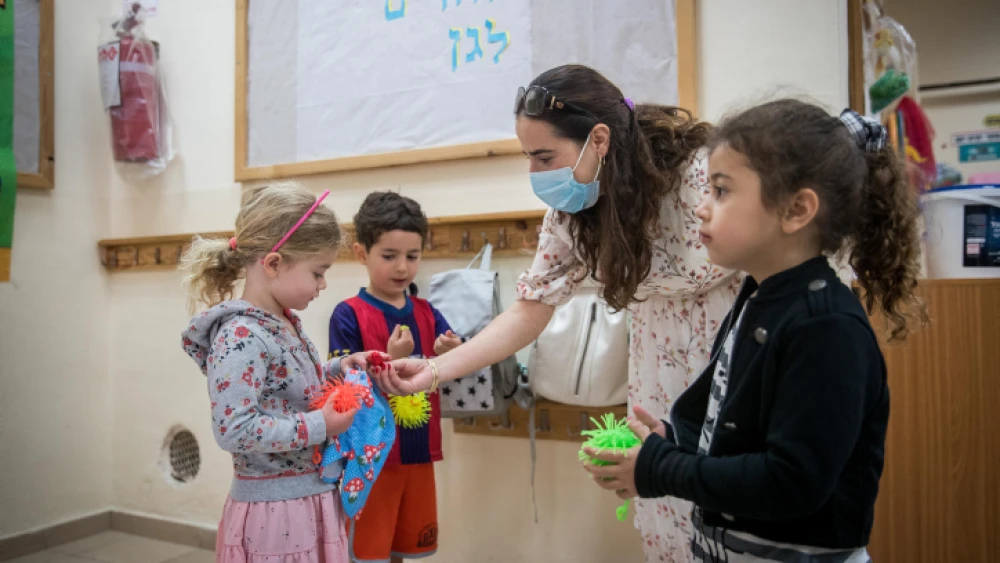
Preschool and kindergarten children began a staged return to school this week, joining children in grades one to three, and 11th and 12th, who returned to school the week beforehand. In addition, businesses and even malls have reopened for business, albeit subject to health regulations. Many national parks also reopened to visitors.
On Monday, Israel also eased restrictions on nationals and residents arriving from overseas, allowing them to quarantine for 14 days at home, rather than at previously mandated state-run “isolation hotels.”
Foreign nationals are still not allowed to enter Israel.
Evening restrictions on shops and businesses in Arab-majority areas during Ramadan were lifted, except in certain hotspot areas.
Beaches remained closed, though the warm weather has drawn many people to the seaside despite the ban.
Police will be out en masse to enforce social-distancing measures for Monday night’s Lag B’Omer celebrations, as part of which hundreds of thousands of Israelis usually make a pilgrimage to the tomb in Meron of Rabbi Shimon Bar Yochai, the father of the Kabbalah and prominent activist against the Roman occupation in the second century C.E.
Rabbi Shimon Bar Yochai’s yahrzeit is commemorated on the 33rd of the 49 days of the Omer, the period between the second night of Passover and the eve of Shavuot. In addition, bonfires symbolizing the “blazing light of Torah” are burned throughout the country.
However, bonfires are prohibited this year, as is pilgrimage to Meron, with violators being eligible for a NIS 500 ($142) fine.
Israeli Prime Minister Benjamin Netanyahu has said that he hopes Israel will be able to abolish all lockdown restrictions by mid-June, but warned that lockdown measures would have to be reinstated the coronavirus infection rate rises above 100 new cases per day, if the number of cases doubles in less than 10 days, or if the number of COVID-19 patients in serious condition rises above 250.