


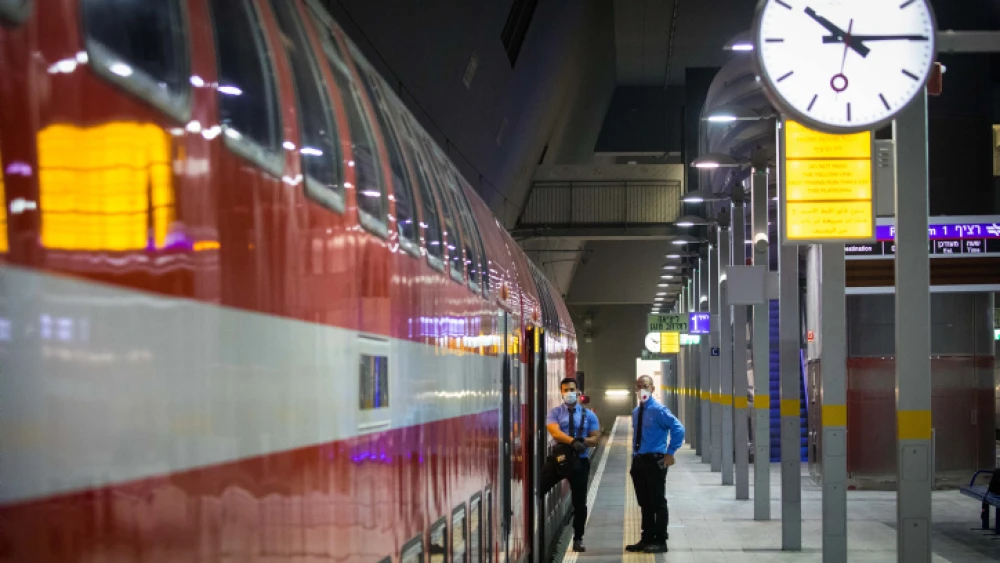
Israel’s train service will resume operations under new regulations on June 22 after being shuttered three months ago, the country’s coronavirus Cabinet announced on Wednesday.
Just 500 passengers—75 percent of the railcars’ capacity—will be allowed on each train, and seats will have to be booked up to 48 hours in advance.
Passengers will be obligated to wear masks at all times, including when speaking on the phone, and will not be permitted to eat or drink on the train.
The loosening of coronavirus restrictions comes amid a rise in the number of coronavirus cases in the past several days, with 288 new cases being reported by the Health Ministry between Tuesday and Wednesday evening.
Israel surpassed 4,000 active COVID-19 cases on Thursday morning, and there are now 39 people in serious condition, up from 36 on Wednesday.
On Wednesday, government officials decided to implement travel, gathering and schooling restrictions on the Bedouin townships of Ar’ara BeNegev and Rahat, as well as the Ajami neighborhood of Tel Aviv-Jaffa, all of which have seen especially high numbers of new infections.
However, after meetings between Israeli Prime Minister Benjamin Netanyahu, Defense Minister Benny Gantz and ministerial and cultural leaders the government also announced that cultural events throughout the country would once again be permitted to crowds of 250 or less, and up to 500 with special permission from the director of the Culture and Sports Ministry.



