The Israeli government approved a series of measures on Monday aimed at containing the spread of COVID-19, following a heated emergency session of the “coronavirus Cabinet,” the Knesset committee tasked with overseeing the country’s response to the pandemic.
Israel is currently experiencing a second wave of coronavirus infections with the total number of confirmed cases exceeding 30,000 on Monday, according to date released from the Israeli Ministry of Health.
Among the measures approved were the closure until further notice of all event halls, bars (including those in hotels), clubs, gyms and public pools; the cancellation of summer camps for kids in fifth grade and above; and limiting synagogues and other houses of worship to a maximum of 19 congregants. Only 20 passengers at a time will be allowed on buses with windows open and air-conditioning kept off; and gatherings will be limited to 20 people, who will be required to wear masks and adhere to social-distancing directives.
Some 30 percent of public-sector employees will be ordered to work from home.
At the start of the meeting, held after late-night debates on the extent of the regulations, Israeli Prime Minister Benjamin Netanyahu stressed that immediate action was required to keep the country’s health system from being overrun.
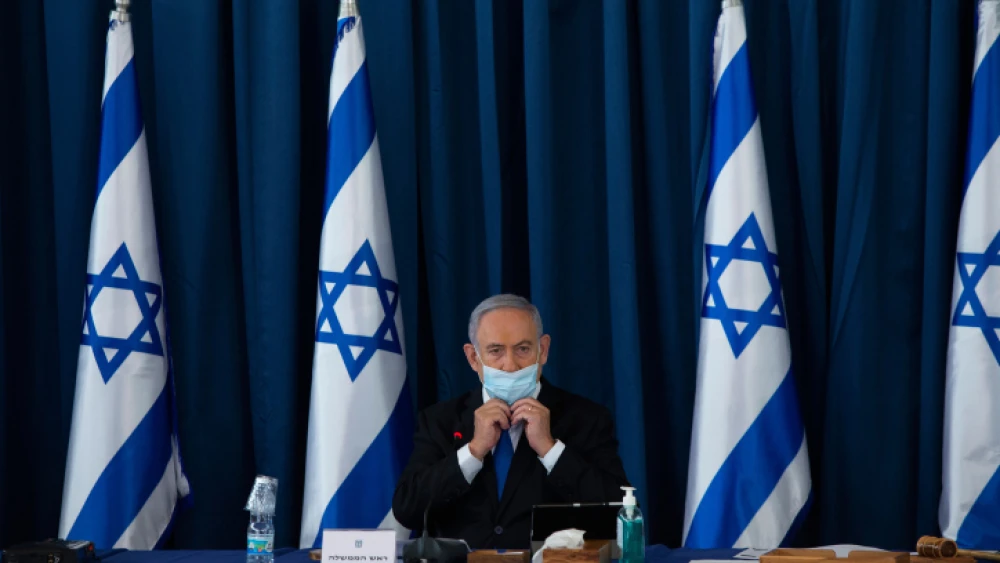
He said “the pandemic is spreading. It’s plain as day that the numbers are rising sharply.”
“Today, there are about 90 patients in serious condition, and that number is doubling every four days [the prime minister later corrected the doubling rate to every 10 to 12 days]. If we do not act now, we will be faced with hundreds, and perhaps more than 1,000, additional patients in serious condition during the coming weeks—something that will paralyze our [health and economic] systems. We thus need to take immediate steps to prevent the need for much more extreme measures later,” he added.
Netanyahu had warned on Sunday that urgent measures would be required to combat what he called a “very strong” resurgence of COVID-19 that will see “an increase and a doubling of the number of severe cases.”
As of Monday afternoon, the Health Ministry reported a total death toll since the start of the pandemic of 332, with 11,856 active cases and 32 people on ventilators.
Israel began lifting COVID-19-related restrictions in early May. Soon afterwards came a resurgence of the infectious disease when schools and businesses reopened following two months of national lockdown.