The people of Iran went to the polls and elected “moderate reformer” candidate Masoud Pezeshkian, defeating Ayatollah Khamenei’s favored candidate, Saeed Jalili, in a race to replace the late President Ebrahim Raisi, who died in a helicopter crash on May 19. The election saw a surge in turnout with 53% of the population voting for him.
Pezeshkian, a 69-year-old former heart surgeon, has promised to “open up to the West” and “bring new hope for diplomacy with Iran.” However, he tempered, “with the one exception of Israel.”
What are the implications for this new leader? Will he speak about his country’s controversial nuclear program? How much autonomy will he get from longtime Supreme Leader Ayatollah Khameini and the Islamic Revolutionary Guard Corps? Will he upend Tehran’s relationship with Russia, China and North Korea? And what of the proxy war that Iran has been waging against the State of Israel, using Hamas, Hezbollah and the Houthis?
Is Pezeshkian a “wolf in sheep’s clothing,” vetted by the Iranian Guardian Council, or an actual reformer?
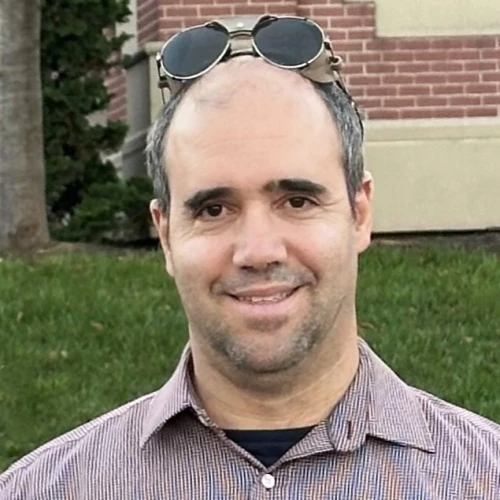
Benham Ben Taleblu tackles the answers to those questions and more.
About this speaker: Behnam Ben Taleblu is a senior fellow at FDD where he focuses on Iranian security and political issues. Behnam previously served as a research fellow and senior Iran analyst at FDD. Prior to his time at FDD, Behnam worked on non-proliferation issues at an arms control think-tank in Washington. Leveraging his subject-matter expertise and native Farsi skills, Behnam has closely tracked a wide range of Iran-related topics including nuclear non-proliferation, ballistic missiles, sanctions, the Islamic Revolutionary Guard Corps, the foreign and security policy of the Islamic Republic, and internal Iranian politics. Frequently called upon to brief journalists, congressional staff and other Washington audiences, Behnam has also testified before the U.S. Congress and Canadian Parliament.
His analysis has been quoted in The Washington Post, The Wall Street Journal, Reuters, Fox News, The Associated Press, and Agence France-Presse, among others. Additionally, he has contributed to or co-authored articles for Foreign Affairs, Foreign Policy, Fox News, The Hill, War on the Rocks, The National Interest, and U.S. News & World Report. Behnam has appeared on a variety of broadcast programs, including BBC News, Fox News, CBS Interactive, C-SPAN, and Defense News. Behnam earned his MA in International Relations from The University of Chicago, and his BA in International Affairs and Middle East Studies from The George Washington University’s Elliott School of International Affairs.