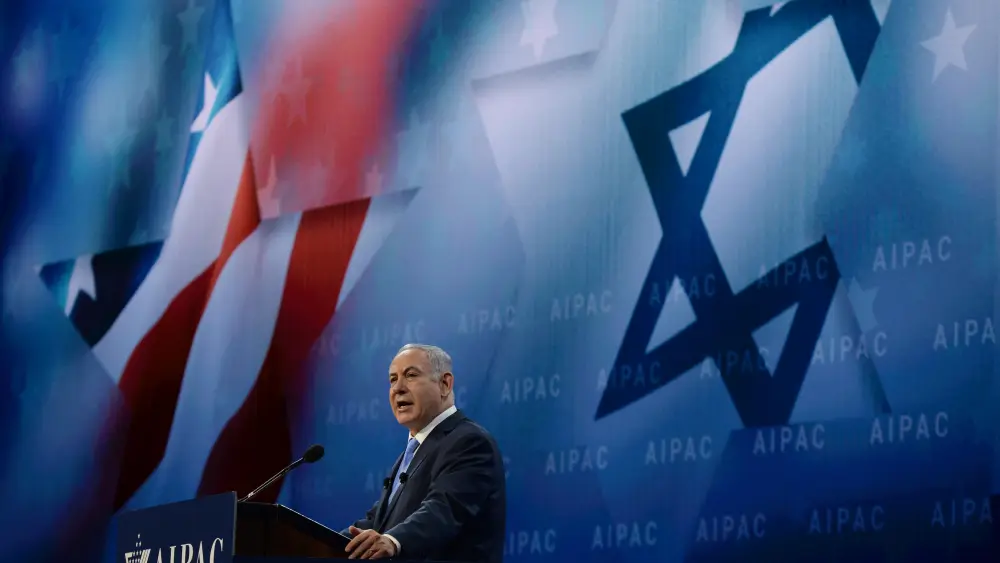
A number of Democratic candidates running for president in 2020 announced that they will not attend the American Israel Public Affairs Committee’s annual policy conference.
This comes after the left-wing group MoveOn called on candidates to skip the event through conducting a survey among its members, in which 74 percent “agree or strongly agree” that “any progressive vying to be the Democratic nominee for President should skip the AIPAC conference,” said the organization in a statement.
Sen. Kirsten Gillibrand (D-N.Y.) will not be there, her senior adviser told JNS.
“Senator Gillibrand was not planning to speak at the policy conference and will not be attending,” said Glen Caplin. “As she does every year, she will meet separately with her New York constituents.”
Sen. Amy Klobuchar (D-Minn.) “is not planning to attend, but she will be meeting with her constituents,” her spokesperson told JNS.
Sen. Elizabeth Warren (D-Mass.), Sen. Kamala Harris (D-Calif.), Sen. Bernie Sanders (I-Vt), former Rep. Beto O’Rourke (D-Texas), and former Housing and Urban Development Secretary Julian Castro are not slated to go to the conference, known as the largest annual pro-Israel gathering, reported the Associated Press.
Harris addressed the 2017 policy conference.
Sanders skipped the conference in 2016 as a presidential candidate. He reportedly offered to address the conference remotely, citing scheduling conflicts, but was denied by AIPAC. Instead, Sanders released a speech of what he would’ve said had he been in attendance.
Sanders’s policy director Josh Orton confirmed his upcoming absence, saying the senator is “concerned about the platform AIPAC is providing for leaders who have expressed bigotry and oppose a two-state solution.”
Citing a scheduling conflict, former Rep. John Delaney will not be in attendance.
“He’s attended the conference every year since he’s been in Congress, and he very much looks forward to being back next year,” deputy press secretary Ahmed Elsayed told the AP.
Pete Buttigieg, mayor of South Bend, Ind., who has formed an exploratory committee, also relayed via a spokesperson that he will not be at the AIPAC conference, reported The New York Jewish Week.
Washington Gov. Jay Inslee will also not be there, reported ABC News.
JNS reached out to the remaining candidates to see whether or not they plan on attending, but has not received comment. They include Sen. Cory Booker (D-N.J.), Sen. Kirsten Gillibrand (D-N.Y.), Rep. Tulsi Gabbard (D-Hawaii), former Gov. John Hickenlooper (D-Colo.), author Marianne Williamson and entrepreneur Andrew Yang.
U.S. Vice President Mike Pence, Israeli Prime Minister Benjamin Netanyahu, U.S. Secretary of State Mike Pompeo, former Israel Defense Forces chief of staff and Blue and White Party leader Benny Gantz, Senate Minority Leader Chuck Schumer (D-N.Y.) and Speaker of the House Nancy Pelosi (D-Calif.) are among the main speakers scheduled to address the conference, which take place from March 24-26, just weeks before Israelis go to the polls on April 9.