Jewish and Israeli Holidays
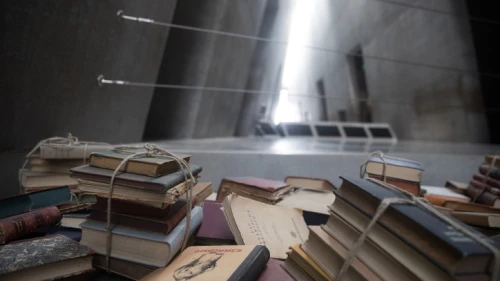
Strict coronavirus regulations prevent public events to mark Holocaust Remembrance Day this year, leading organizers to find new ways to continue the traditions and educational efforts associated with it.
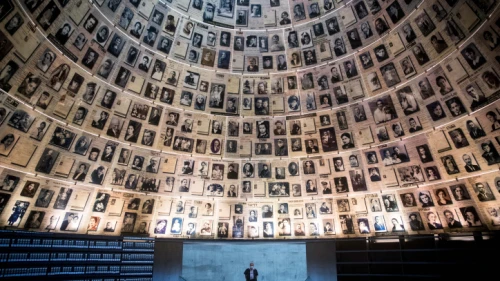
According to Israel’s Central Bureau of Statistics, there were 14.7 million Jews worldwide at the end of 2018, which is 100,000 short of the 1925 figures and far short of the 16.6 million estimated to have been alive on the eve of the Second World War in 1939.

Calling it “perhaps the most sensitive issue in Israeli society,” a senior Israeli defense official says public-health concerns stemming from the coronavirus pandemic must be weighed against the need to accommodate bereaved families.
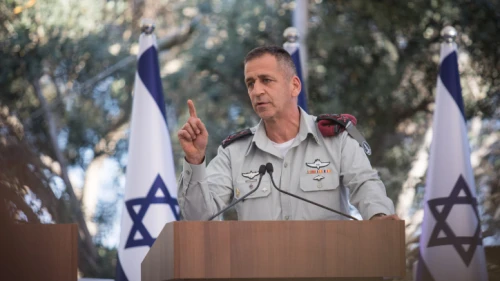
“Memory is a source of strength, spirit and values,” says Lt. Gen. Aviv Kochavi in a letter to all Israel Defense Forces’ personnel ahead of Holocaust Remembrance Day.

The Arolsen Archives, based in the German town of Bad Arolsen, said that the recent addition to its database was completed with its partner, Yad Vashem, Israel’s Holocaust memorial center in Jerusalem.

With memorial events canceled due to the coronavirus, Lower Saxony state premier Stephan Weil called on Germans to recall “the place that shows the cruelty and mercilessness of the darkest part of our history.”

A new book out this month timed to Yom Hashoah, “All the Horrors of War: A Jewish Girl, British Doctor, and the Liberation of Bergen-Belsen,” weaves the historical and personal story of both the rescued and the rescuer.
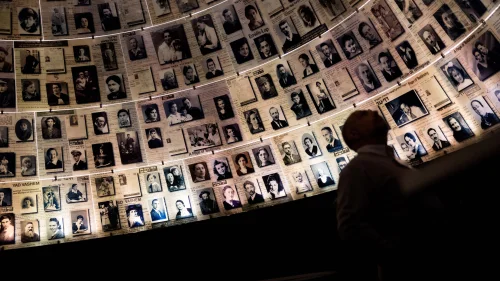
Yom Hashoah commemorations, like everything else this year, may be low-key, but they will be marked with the same sense of honor and respect so indicative of this stalwart community.
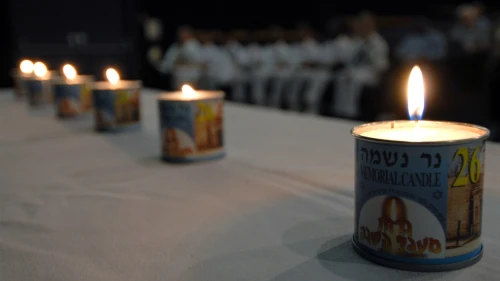
It calls upon people to hold individual commemorations by lighting six memorial candles, followed by the “Kel Maleh“ memorial prayer and “Nizkor,“ a poem written by Abba Kovner.
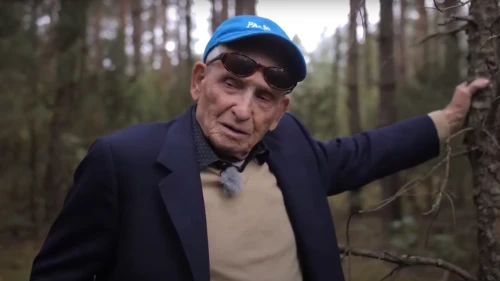
His message to a world struggling through a pandemic ahead of remembrance of Yom Hashoah: “People should be nice to each other, to help each other. Be good to your family and to people.”

“The project reflects the determination to promote the importance of memory by utilizing innovative technology to teach the timeless lessons of the Holocaust,” said the organization, which normally sends throngs Jewish youth to the site to mark the date.
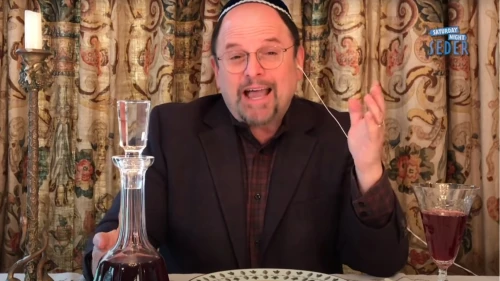
The hour-long “Saturday Night Seder” started off with a ditty by actor Jason Alexander.