






“In one case, we found a hive inside a couch on a home’s balcony,” a beekeeper from the western Negev said.

“I went to see them. They are actually quite a good team as well,” said Gianni Infantino.

Budapest vetoed previous attempts to isolate and defund the Jewish state.

The reported talks marked the first direct U.S. engagement with Hamas since the Oct. 10, 2025, ceasefire.

Beijing calls on Tehran to restore shipping through the key waterway as the U.S. enforces naval blockade and tightens sanctions pressure.

The Israeli prime minister joins roughly two dozen world leaders, including Trump, Xi Jinping and Pope Leo XIV, on Time’s 2026 list of most influential people.

Ten ships have been turned back and none has broken through since the blockade began, according to the U.S. military.

Israeli Prime Minister Benjamin Netanyahu will speak directly with Lebanese President Joseph Aoun, according to Israeli Cabinet minister.

Gadi Taub’s criticism of Ronen Bergman’s reporting on the Mossad’s pager operation against Hezbollah was not defamatory, a judge ruled.

Roberta Metsola referenced a recent wave of torchings and intimidation on the streets of European cities.

The vessels left Spain following a “temporary weather-related delay,” organizers said.

The resolutions were defeated with support from a handful of Senate Democrats and every Republican.

The teen, who said he did it because he was angry over the Israel-Gaza conflict, placed a sign that read, “Anne Frank’s diary was a fake.”

“Such discriminatory actions isolate community members, harm small businesses and do nothing to promote peace,” the Anti-Defamation League stated.

The Israeli prime minister added that the Jewish state is set to eliminate the “great stronghold” of Bint Jbeil, “the place where Hassan Nasrallah said 26 years ago, ‘The Israelis are cobwebs.’”

The department is “targeting regime elites like the Shamkhani family that attempt to profit at the expense of the Iranian people,” said Scott Bessent, U.S. treasury secretary.

Treasury Secretary Scott Bessent said at a press briefing that Iran’s decision to bomb its Arab neighbors may prove to be one of its “fatal mistakes,” as Gulf countries squeeze Iranian funds.

“The suspension of SJP is a vital step that recognizes a long-standing pattern rather than a single isolated incident,” a Duke student told JNS.

The sentences follow “fast-tracked trials conducted without due process” and “reliance on torture-tainted forced ‘confessions’ as evidence,” the Center for Human Rights in Iran stated.

“This lawsuit seeks to hold UCLA accountable and to ensure that no faculty member is ever again subjected to such blatant discrimination,” the law firm representing the employees stated.

The measure, which aims to correct a “deliberate attempt to erase the Jewish identity of Judea and Samaria,” passed both houses comfortably.

The United States Navy’s maritime cordon targets Iran’s economic lifelines while relying on advanced intelligence, surveillance and interception systems.

“We’re suing to keep these assets in Cincinnati where they belong,” the state prosecutor’s office said of the school’s shuttering Cincinnati campus.

“It’s a lot less threatening when you are sitting around drinking coffee and having a one-on-one conversation,” Alyssa Sadoff, of Yad Vashem USA Foundation, told JNS.

The United States Navy’s maritime cordon targets Iran’s economic lifelines while relying on advanced intelligence, surveillance and interception systems.

Ten ships have been turned back and none has broken through since the blockade began, according to the U.S. military.

Negotiators are reportedly seeking compromises on Iran’s nuclear program, freedom of navigation in the Strait of Hormuz and compensation for wartime damages.

The proposal includes three broad aims: clearing a backlog of stranded vessels, conducting a major demining effort, and setting up ongoing naval escorts.

The Nazareth resident was accused of photographing military and energy sites for an Iranian handler in exchange for payment.

Iran is said to have obtained a Chinese spy satellite in 2024 that helped the IRGC target U.S. military sites during the recent war.

“U.S. forces maintain maritime superiority in the Middle East,” said Adm. Brad Cooper; Trump: the Iran war is “very close to over.”


Emotional gathering highlights the personal stories of fallen soldiers.

“The military at large is not systemically antisemitic,” but there is “definitely a lack of concern for religious needs,” said Rabbi Elie Estrin, of the Aleph Institute.

He discusses what it means for Hungarian Jewry and relations with Israel.

“He wants to flex his authority as mayor of New York City, so he brings the desk outside to show he should be taken seriously,” Beverly Hallberg, president of District Media Group, told JNS.

“My mother told me I was gonna do it, and so that was sort of enough for me,” he told JNS of becoming an Eagle Scout.



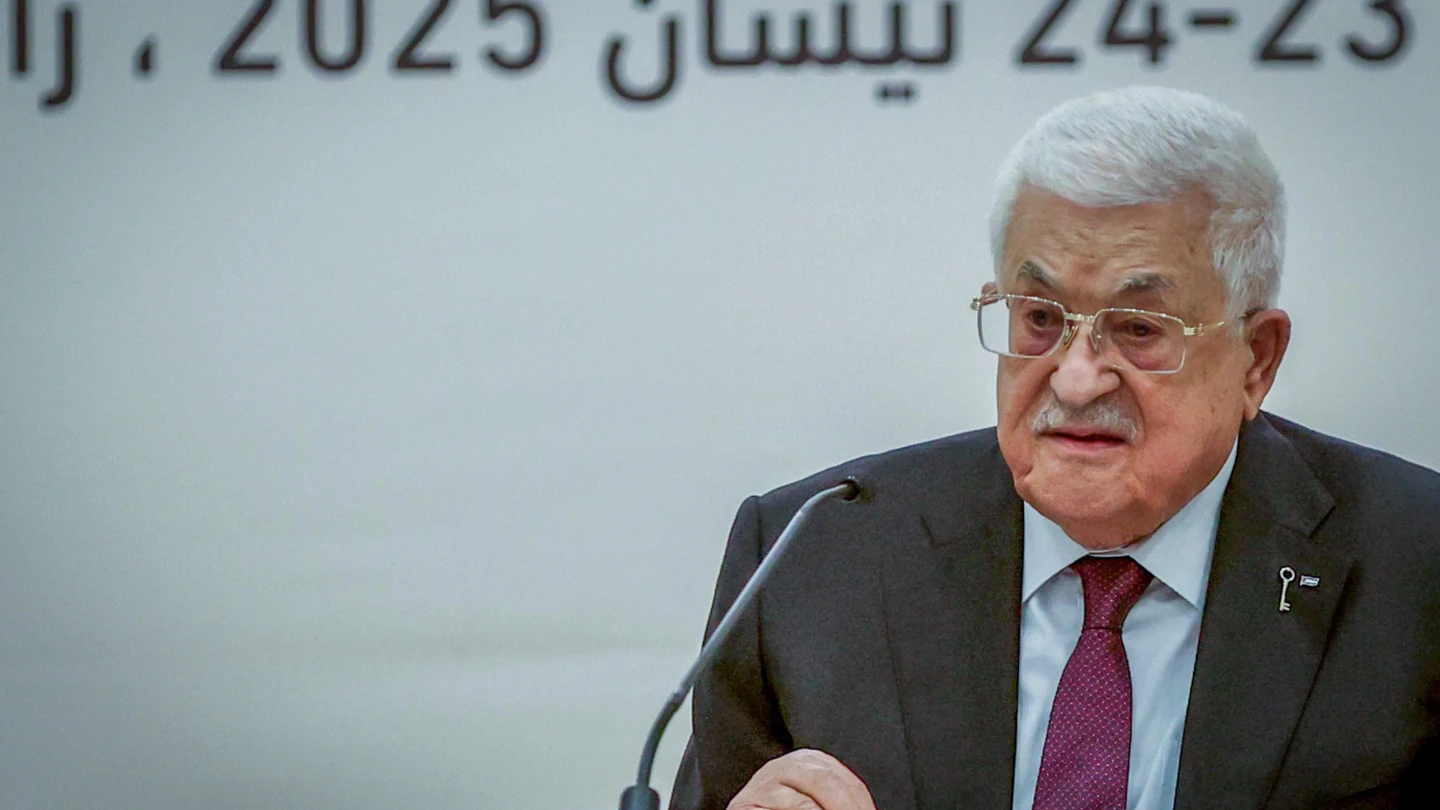
NOW PLAYING ON JNS TV
How Iranian influence campaigns shape narratives in the United States
AXIS OF TRUTH with host Emily Schrader
The real battlefield isn’t in the Middle East, it’s unfolding right inside the United States. Host Emily Schrader explains how influence shapes modern conflict and unpacks an alleged long-term strategy by Iran to spread ideology through institutions and community networks across America. You’ll learn how narratives are engineered, how misinformation can reshape global conversations in real time and why even world leaders and media outlets can unknowingly amplify strategic propaganda.
The real battlefield isn’t in the Middle East, it’s unfolding right inside the United States. Host Emily Schrader explains how influence shapes modern conflict and unpacks an alleged long-term strategy by Iran to spread ideology through institutions and community networks across America. You’ll learn how narratives are engineered, how misinformation can reshape global conversations in real time and why even world leaders and media outlets can unknowingly amplify strategic propaganda.
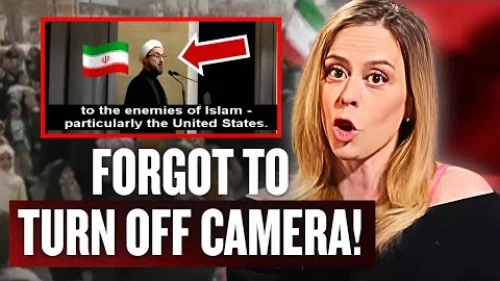
How Iranian influence campaigns shape narratives in the United States
How Iranian influence campaigns shape narratives in the United States
AXIS OF TRUTH with host Emily Schrader
The real battlefield isn’t in the Middle East, it’s unfolding right inside the United States. Host Emily Schrader explains how influence shapes modern conflict and unpacks an alleged long-term strategy by Iran to spread ideology through institutions and community networks across America. You’ll learn how narratives are engineered, how misinformation can reshape global conversations in real time and why even world leaders and media outlets can unknowingly amplify strategic propaganda.
The real battlefield isn’t in the Middle East, it’s unfolding right inside the United States. Host Emily Schrader explains how influence shapes modern conflict and unpacks an alleged long-term strategy by Iran to spread ideology through institutions and community networks across America. You’ll learn how narratives are engineered, how misinformation can reshape global conversations in real time and why even world leaders and media outlets can unknowingly amplify strategic propaganda.
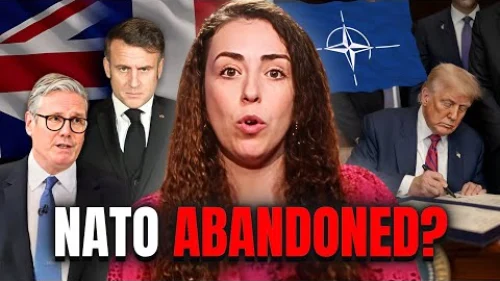
How NATO’s dependence on the US is testing the alliance
How NATO’s dependence on the US is testing the alliance
The MEIRA K SHOW with host Meira K
This episode pulls back the curtain on NATO, teaching viewers not just what it is, but why it worked for decades. Host Meira K discusses how shifting politics, European dependence and the fallout from the Iran war are now putting NATO under unprecedented strain. You’ll learn how America became the backbone of global security, why Europe’s choices may be catching up with it and what a world without NATO could actually look like.
This episode pulls back the curtain on NATO, teaching viewers not just what it is, but why it worked for decades. Host Meira K discusses how shifting politics, European dependence and the fallout from the Iran war are now putting NATO under unprecedented strain. You’ll learn how America became the backbone of global security, why Europe’s choices may be catching up with it and what a world without NATO could actually look like.

A closer look at what’s happening inside Iran
A closer look at what’s happening inside Iran
THE QUAD with host Fleur Hassan-Nahoum and guest Mandana Karimi
What if everything you’ve been told about Iran and even “peace” itself is dangerously incomplete? In this raw and gripping interview, activist Mandana Karimi reveals what life under Iran’s regime really teaches you: the brutal cost of silence and why true freedom is something most people in the West take for granted. Through her personal story of arrest, torture, exile and continued threats even abroad, viewers gain a chilling, firsthand understanding of oppression and why many Iranians see global diplomacy not as hope, but as betrayal.
What if everything you’ve been told about Iran and even “peace” itself is dangerously incomplete? In this raw and gripping interview, activist Mandana Karimi reveals what life under Iran’s regime really teaches you: the brutal cost of silence and why true freedom is something most people in the West take for granted. Through her personal story of arrest, torture, exile and continued threats even abroad, viewers gain a chilling, firsthand understanding of oppression and why many Iranians see global diplomacy not as hope, but as betrayal.
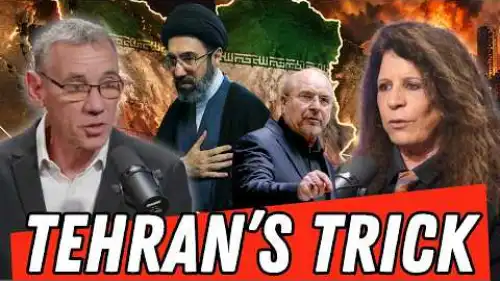
The Iran ceasefire explained
The Iran ceasefire explained
ISRAEL UNDIPLOMATIC with hosts Ruthie Blum and Mark Regev.
The ceasefire everyone thought would end the Iran war might actually be the most dangerous moment yet. Senior contributing editor at JNS Ruthie Blum and former Israeli ambassador to the United Kingdom Mark Regev—both former advisers in the Prime Minister’s Office— discuss how President Trump’s “pause” strategy could be a ticking clock toward an even bigger conflict, why critics on both sides might be missing the point and the brutal trade-offs between stopping Iran’s nuclear ambitions and triggering regime change. The hosts break down what’s really happening behind the diplomacy, how military pressure reshapes negotiations and why the next two weeks could decide not just the region’s future, but global stability itself.
The ceasefire everyone thought would end the Iran war might actually be the most dangerous moment yet. Senior contributing editor at JNS Ruthie Blum and former Israeli ambassador to the United Kingdom Mark Regev—both former advisers in the Prime Minister’s Office— discuss how President Trump’s “pause” strategy could be a ticking clock toward an even bigger conflict, why critics on both sides might be missing the point and the brutal trade-offs between stopping Iran’s nuclear ambitions and triggering regime change. The hosts break down what’s really happening behind the diplomacy, how military pressure reshapes negotiations and why the next two weeks could decide not just the region’s future, but global stability itself.

Why a ceasefire with Iran may be more dangerous than it looks
Why a ceasefire with Iran may be more dangerous than it looks
JLMinute with hosts Daniel Seaman and Alex Traiman
Just when it looked like the war might be winding down, U.S.-Iran negotiations have collapsed. Unpacking the latest developments, Josh Hasten and Alex Traiman explain how modern warfare really works...not just through missiles and airstrikes, but through strategy and even social media narratives that work to shape perception. You’ll learn why a ceasefire doesn’t mean peace, how both sides define “victory” completely differently and why the next move hinges on power and leverage.
Just when it looked like the war might be winding down, U.S.-Iran negotiations have collapsed. Unpacking the latest developments, Josh Hasten and Alex Traiman explain how modern warfare really works...not just through missiles and airstrikes, but through strategy and even social media narratives that work to shape perception. You’ll learn why a ceasefire doesn’t mean peace, how both sides define “victory” completely differently and why the next move hinges on power and leverage.

Middle East conflict analysis: Trump, Iran, and the limits of prediction
Middle East conflict analysis: Trump, Iran, and the limits of prediction
STRAIGHT UP with host Daniel Seaman
You think you understand what’s happening in the Middle East right now, but this episode will flip that confidence on its head. Former director of the Israeli Government Press Office (GPO), Danny Seaman, teaches viewers a powerful lesson in humility and patience: history doesn’t unfold on your timeline, and anyone claiming certainty is bluffing. By weaving together geopolitics, recent Israel–Iran tensions and even biblical parallels, the video shows how complex events are layered, strategic and often wildly unpredictable. You’ll walk away understanding why “it’s not over till it’s over” isn’t just a cliché, but the key to making sense of war and global power plays, and why the biggest mistake you can make right now is thinking you already know how this ends.
You think you understand what’s happening in the Middle East right now, but this episode will flip that confidence on its head. Former director of the Israeli Government Press Office (GPO), Danny Seaman, teaches viewers a powerful lesson in humility and patience: history doesn’t unfold on your timeline, and anyone claiming certainty is bluffing. By weaving together geopolitics, recent Israel–Iran tensions and even biblical parallels, the video shows how complex events are layered, strategic and often wildly unpredictable. You’ll walk away understanding why “it’s not over till it’s over” isn’t just a cliché, but the key to making sense of war and global power plays, and why the biggest mistake you can make right now is thinking you already know how this ends.
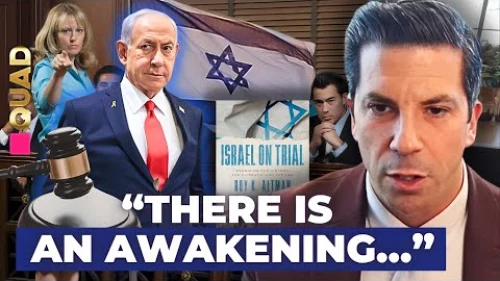
Are Americans shifting back toward support for Israel?
Are Americans shifting back toward support for Israel?
THE QUAD with host Fleur Hassan-Nahoum and guest, Judge Roy Altman
Explore how the battle over Israel is being waged not only on the ground, but in courts, on campuses and in the court of public opinion, where facts are often eclipsed by “oppressor vs. oppressed” narratives. From legal claims about Israel’s legitimacy to the rise of anti-Zionism and global propaganda, this episode examines why truth, evidence and Western values are at stake—and what happens when they stop mattering.
Explore how the battle over Israel is being waged not only on the ground, but in courts, on campuses and in the court of public opinion, where facts are often eclipsed by “oppressor vs. oppressed” narratives. From legal claims about Israel’s legitimacy to the rise of anti-Zionism and global propaganda, this episode examines why truth, evidence and Western values are at stake—and what happens when they stop mattering.


Points of view from across the Jewish world






Press releases from Israel and around the pro-Israel and Jewish world

Author Noga Sklar documents Israel’s experience following the Hamas-led terrorist attacks on Oct. 7.

It is a world unto its own, a form of society unto itself.

It will support emergency medical response and humanitarian aid in conflict-affected areas.

Its news-related output should be treated with the same skepticism as social media: Question it, verify it, and do not assume neutrality.

Misgav Am, Manara, Snir, Evron, Metzuba and other kibbutzim are on the frontlines, living under constant threat and uncertainty amid fighting between Israeli forces and Hezbollah in Lebanon.

The film series will be hosted April 13 through April 20 globally, with screenings occurring in Frankfurt and Berlin in Germany, as well as all five boroughs of New York City.

The Passover story—of slavery, resistance, liberation—is not just a Jewish story. It is a human story, now playing out.

“Don’t miss this incredible opportunity to participate in a global celebration of heritage and hope,” says co-chair Sara Cannon.

With two graduate degrees in education, Josh Micley is an experienced leader who has served as a camp director, public school teacher and school administrator.

Retired Maj. Gen. Danny Rothschild and nuclear expert Ori Nissim Levy detail the military campaign, Iran’s enriched uranium stockpile and next steps.