





The U.S. secretary of state said Tehran was on the verge of having too many missiles and drones to stop its nuclear weapons program in the future.

“Their air and missile defense systems have largely been destroyed,” Adm. Brad Cooper stated.

During the Iran war, Qatar’s media networks have adopted narratives aligned with Iran while framing Israel and the U.S. negatively.

A new medical center has opened in Kiryat Shmona to provide daytime care during wartime.

The elimination of key figures has weakened the Axis of Resistance’s influence over public opinion and the broader regional system.

The International Fellowship of Christians and Jews will provide relief to 200,000 Israelis as the country endures ongoing war.

“Such rampant incitement in the midst of a war, which receives expression and backing from ‘Channel 12,’ is not only a criminal offense but also a dangerous attempt to weaken the spirit of the people.”

Strikes hit money exchange offices linked to terror financing in Beirut; IDF slays Hajj Yusuf Ismail Hashem, commander of Hezbollah’s Southern Front.

Israeli Air Force tanker aircraft have supported the operations, conducting approximately 2,000 aerial refuelings.

Troops locate two production sites and detain property owner.

The U.S.-Israel military campaign could conclude within two to three weeks as objectives near completion, the president said.

Israel must designate the Palestinian Authority a terrorist organization and “act to dismantle it completely,” the Yesha Council said.

The deliberate targeting by Tehran and by its proxy Hezbollah of civilian areas in Israel and in other neighboring states violates all humanitarian norms and is absolutely prohibited.

“It’s a great victory for the First Amendment right to free speech, including the right to draw attention to bigotry and hateful speech,” Paul Eckles, of the Brandeis Center, told JNS. “We commend our client for having the courage to speak out.”

U.S. President Donald Trump appears to have precipitated the move by demanding congressional action in a social media post earlier on Wednesday.

JNS sought comment from Aria Fani and received an autoreply, “On leave until September. Will not check email with capitalist frequency.”

A spokesman for the Ivy told JNS that the school believes being required “to create lists of Jewish faculty and staff, and to provide personal contact information, raises serious privacy and First Amendment concerns.”

The new program adds “America First foreign policy lectures” and shifts focus to merit and core diplomatic skills.

Police officers found evidence that Dejaun Angelo was running a marijuana business in his apartment and “hundreds of ammunition boxes” in a storage unit.
The man sent “several antisemitic and sexually derogatory letters” to the female prosecutor who tried his case, according to the ruling.

“Real peace requires neutral humanitarian agencies, not those serving as an arm of Hamas,” the Israeli envoy to the global body in Geneva, told JNS.

The paper is “just casually whitewashing what ‘J-pilled’ actually means,” Jerry Dunleavy of ‘Just the News’ stated. “ Hint: ‘Israel’ doesn’t start with ‘J.’”

“This wasn’t about what these kids can’t do—it was about what they can do when they’re included,” said Daniel Zeltser, chief operating officer of the community center.

New York City Mayor Zohran Mamdani dodged a question about restoring bike lanes in Williamsburg during a press conference on March 31.

Saudi- and Emirati-led Gulf bloc urges Trump to intensify the Iran campaign and consider a ground invasion, even as he eyes Arab cost-sharing for the conflict.

A new medical center has opened in Kiryat Shmona to provide daytime care during wartime.

Israel must designate the Palestinian Authority a terrorist organization and “act to dismantle it completely,” the Yesha Council said.

The Quds Force officer was eliminated as IDF targets weapons and missile sites across Iran.

The Israeli premier invoked Passover’s Ten Plagues, citing “ten blows” against Iran and “ten achievements,” including Israel’s unprecedented coordination with the United States.

European allies have angered U.S. President Donald Trump by refusing to allow American forces to use their military bases during the war against Iran.

Israel’s foreign minister condemned the attack as “part of the strategy of war crimes committed by the Iranian terrorist regime.”


A combat medic with the IDF’s 769th Brigade speaks with JNS about the complex reality faced by Israel’s northern residents due to ongoing attacks by Hezbollah.

David Azran believes that what goes around comes around, telling JNS: “There is a circle of energy.”

Foreign visitors caught in Israel amid escalating conflict describe disrupted travel, sleepless nights and a growing sense of solidarity as they wait for flights home.

“He was experimenting with notions of identity well before ‘ethnicity’ came into play,” Jenna Weissman Joselit told JNS. “He was very ahead of his time.”

Inside Rishon LeZion’s emergency response unit, reservist medics confront blast injuries, anxiety victims and relentless alerts as Iran alternates between ballistic missiles and cluster munitions in ongoing attacks.





Sharon Liberman Mintz, of Jewish Theological Seminary, told JNS that the 1526 Haggadah “is one of the most exciting books that I have ever had the pleasure to turn the pages of.”

It appears as “a living educational framework—a connection between Jewish communities in Israel and abroad, and a reflection of the strength of these communities across generations.”

Shelley Atlas Serber told JNS that the information about Passover products can help people who are making the holiday at home after travel plans to Israel were canceled.

Prayer notes calling for peace have been sent from Arab countries to the holy site in Jerusalem, and some even from Iran.




NOW PLAYING ON JNS TV
Trump’s Iran strategy explained
ISRAEL UNDIPLOMATIC with hosts Ruthie Blum and Mark Regev.
This episode rips open the chess match behind the current war in Iran and President Trump’s looming ultimatum. Senior contributing editor at JNS Ruthie Blum and former Israeli ambassador to the United Kingdom Mark Regev—both former advisers in the Prime Minister’s Office— explain how modern war and diplomacy actually collide in real time. As missiles fly and deadlines tick down, the discussion unpacks whether Trump’s 15-point plan is a genuine peace offer or a calculated setup for massive escalation, revealing how military pressure, internal regime cracks and global energy chokepoints like the Strait of Hormuz all intertwine. Finally, the hosts clash over the ultimate question: is this the beginning of the end for Iran’s regime… or just another phase of a much bigger game?
This episode rips open the chess match behind the current war in Iran and President Trump’s looming ultimatum. Senior contributing editor at JNS Ruthie Blum and former Israeli ambassador to the United Kingdom Mark Regev—both former advisers in the Prime Minister’s Office— explain how modern war and diplomacy actually collide in real time. As missiles fly and deadlines tick down, the discussion unpacks whether Trump’s 15-point plan is a genuine peace offer or a calculated setup for massive escalation, revealing how military pressure, internal regime cracks and global energy chokepoints like the Strait of Hormuz all intertwine. Finally, the hosts clash over the ultimate question: is this the beginning of the end for Iran’s regime… or just another phase of a much bigger game?
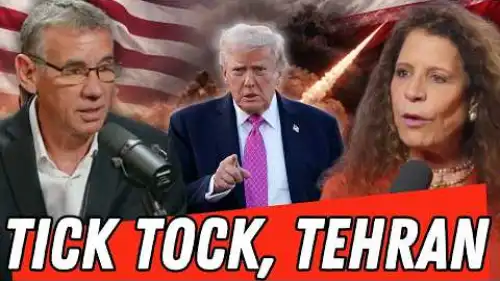
Trump’s Iran strategy explained
Trump’s Iran strategy explained
ISRAEL UNDIPLOMATIC with hosts Ruthie Blum and Mark Regev.
This episode rips open the chess match behind the current war in Iran and President Trump’s looming ultimatum. Senior contributing editor at JNS Ruthie Blum and former Israeli ambassador to the United Kingdom Mark Regev—both former advisers in the Prime Minister’s Office— explain how modern war and diplomacy actually collide in real time. As missiles fly and deadlines tick down, the discussion unpacks whether Trump’s 15-point plan is a genuine peace offer or a calculated setup for massive escalation, revealing how military pressure, internal regime cracks and global energy chokepoints like the Strait of Hormuz all intertwine. Finally, the hosts clash over the ultimate question: is this the beginning of the end for Iran’s regime… or just another phase of a much bigger game?
This episode rips open the chess match behind the current war in Iran and President Trump’s looming ultimatum. Senior contributing editor at JNS Ruthie Blum and former Israeli ambassador to the United Kingdom Mark Regev—both former advisers in the Prime Minister’s Office— explain how modern war and diplomacy actually collide in real time. As missiles fly and deadlines tick down, the discussion unpacks whether Trump’s 15-point plan is a genuine peace offer or a calculated setup for massive escalation, revealing how military pressure, internal regime cracks and global energy chokepoints like the Strait of Hormuz all intertwine. Finally, the hosts clash over the ultimate question: is this the beginning of the end for Iran’s regime… or just another phase of a much bigger game?
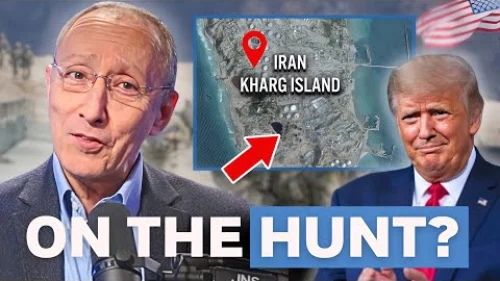
Why Israel’s wartime resilience is reshaping the Iran conflict
Why Israel’s wartime resilience is reshaping the Iran conflict
STRAIGHT UP with host Daniel Seaman
A month into war, Israel isn’t collapsing, it’s revealing a kind of resilience the West barely understands. Former director of the Israeli Government Press Office (GPO), Danny Seaman, explains why Israelis remain steady, even optimistic, under sirens and missile fire; how decades of terror, failed peace formulas and October 7 shaped a new national clarity; and why Israel now sees this war not as another round of violence, but as a historic fight for survival, freedom and moral purpose. This episode is a powerful mix of frontline reality, strategic insight and civilizational perspective that will leave viewers with a far deeper understanding of what Israel is enduring and why it refuses to go back.
A month into war, Israel isn’t collapsing, it’s revealing a kind of resilience the West barely understands. Former director of the Israeli Government Press Office (GPO), Danny Seaman, explains why Israelis remain steady, even optimistic, under sirens and missile fire; how decades of terror, failed peace formulas and October 7 shaped a new national clarity; and why Israel now sees this war not as another round of violence, but as a historic fight for survival, freedom and moral purpose. This episode is a powerful mix of frontline reality, strategic insight and civilizational perspective that will leave viewers with a far deeper understanding of what Israel is enduring and why it refuses to go back.
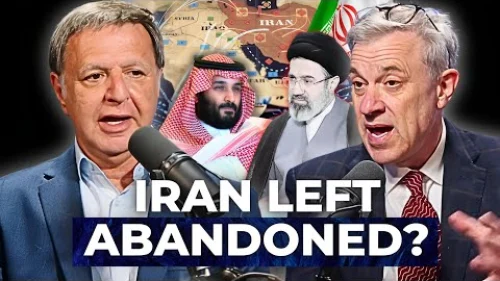
How the Iran conflict is reshaping alliances in the Arab world
How the Iran conflict is reshaping alliances in the Arab world
OUR MIDDLE EAST with hosts Dr. Dan Diker, Khaled Abu Toameh
Learn why the Iran conflict is exposing deep fractures inside the Arab world, how jihadist ideology shapes the battlefield far beyond missiles and diplomacy and why “total victory” means far more than another temporary ceasefire. If you want to understand what the headlines keep missing: who’s afraid, who’s bluffing, who’s shifting alliances and why this moment could redefine the region for years, this episode pulls no punches and leaves you questioning what comes next.
Learn why the Iran conflict is exposing deep fractures inside the Arab world, how jihadist ideology shapes the battlefield far beyond missiles and diplomacy and why “total victory” means far more than another temporary ceasefire. If you want to understand what the headlines keep missing: who’s afraid, who’s bluffing, who’s shifting alliances and why this moment could redefine the region for years, this episode pulls no punches and leaves you questioning what comes next.
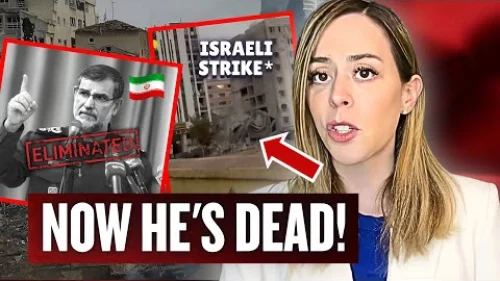
How Israel eliminated one of Iran’s top military commanders
How Israel eliminated one of Iran’s top military commanders
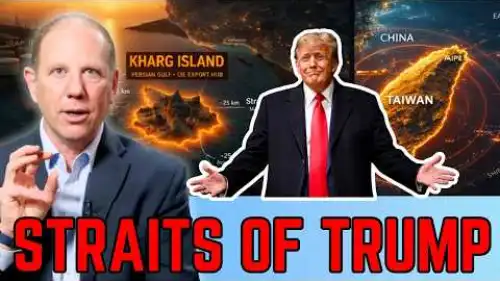
How Trump used strategic chokepoints to pressure Iran and China
How Trump used strategic chokepoints to pressure Iran and China
TRUE EAST with host Doron Spielman
The real story isn’t just the Strait of Hormuz, but something much larger. IDF Spokesman (Res.) Doron Spielman explores whether President Trump is turning global chokepoints into leverage against Iran, China and the entire balance of power? Viewers will learn how the Iran negotiations may be less about diplomacy and more about strategic positioning, why the nuclear issue remains the non-negotiable red line and how the battle over oil routes and maritime control could shape everything from Israel’s security to Taiwan’s future. It’s a bold breakdown of power and geopolitical timing that explains beyond the headlines.
The real story isn’t just the Strait of Hormuz, but something much larger. IDF Spokesman (Res.) Doron Spielman explores whether President Trump is turning global chokepoints into leverage against Iran, China and the entire balance of power? Viewers will learn how the Iran negotiations may be less about diplomacy and more about strategic positioning, why the nuclear issue remains the non-negotiable red line and how the battle over oil routes and maritime control could shape everything from Israel’s security to Taiwan’s future. It’s a bold breakdown of power and geopolitical timing that explains beyond the headlines.

How media framing shapes coverage of Iran and global conflicts
How media framing shapes coverage of Iran and global conflicts
MEIRA K SHOW: This video will completely rewire how you read the news by exposing the subtle, almost invisible tricks media outlets use to shape what you believe without ever technically lying. Host Meira K breaks down how headlines manipulate your gut reactions, how “half-truths” hide the real story, and how language, images and repetition quietly steer you toward a narrative, all using real examples from coverage of the Iran war. By the end, you won’t just see bias, you’ll recognize the exact playbook being used on you daily, making this less of a commentary and more of a survival guide for thinking clearly in a manipulated information world.
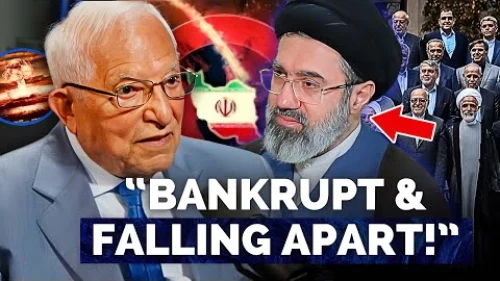
Is the Iranian regime near collapse?
Is the Iranian regime near collapse?
THE QUAD with host Fleur Hassan-Nahoum.
This interview pulls back the curtain on Iran like you’ve never seen before, revealing how a revolution that promised freedom turned into a global power play with nuclear ambitions and regional chaos at its core. Veteran analyst Menashe Amir breaks down the hidden strategy of Iran’s regime, why the threat was more urgent than the world realized and what it will actually take to bring lasting peace to the Middle East. You’ll walk away understanding not just what’s happening, but why it matters, how close the world may have been to a much larger war, and why the future could hinge on one turning point inside Iran itself.
This interview pulls back the curtain on Iran like you’ve never seen before, revealing how a revolution that promised freedom turned into a global power play with nuclear ambitions and regional chaos at its core. Veteran analyst Menashe Amir breaks down the hidden strategy of Iran’s regime, why the threat was more urgent than the world realized and what it will actually take to bring lasting peace to the Middle East. You’ll walk away understanding not just what’s happening, but why it matters, how close the world may have been to a much larger war, and why the future could hinge on one turning point inside Iran itself.
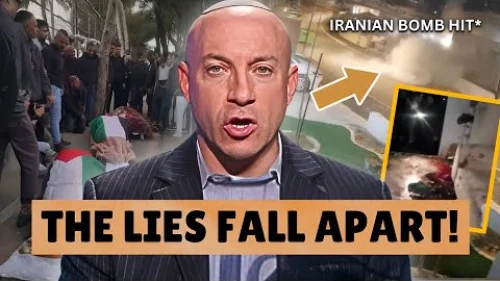
How Iran missile strikes are reported in Western media
How Iran missile strikes are reported in Western media
JUDEACATION with host, Josh Hasten.
They blamed Israel within minutes, but what if the truth flips the entire narrative on its head? Watch to uncover how misinformation spreads faster than facts, from a deadly missile strike falsely pinned on Israel to the deeper mechanics of propaganda, incitement and distorted statistics shaping global perception. You’ll learn how narratives are constructed, why certain actors benefit from confusion, and how real-world consequences, from terror tactics to international pressure, are tied to these distortions.
They blamed Israel within minutes, but what if the truth flips the entire narrative on its head? Watch to uncover how misinformation spreads faster than facts, from a deadly missile strike falsely pinned on Israel to the deeper mechanics of propaganda, incitement and distorted statistics shaping global perception. You’ll learn how narratives are constructed, why certain actors benefit from confusion, and how real-world consequences, from terror tactics to international pressure, are tied to these distortions.


Points of view from across the Jewish world








Press releases from Israel and around the pro-Israel and Jewish world

“Don’t miss this incredible opportunity to participate in a global celebration of heritage and hope,” says co-chair Sara Cannon.

With two graduate degrees in education, Josh Micley is an experienced leader who has served as a camp director, public school teacher and school administrator.

Retired Maj. Gen. Danny Rothschild and nuclear expert Ori Nissim Levy detail the military campaign, Iran’s enriched uranium stockpile and next steps.

A new collaboration expands efforts to address antisemitism and advance student leadership.

And volunteerism becomes one of its primary engines.

“We’re opening the door for talented Jewish professionals to pursue chaplaincy with the highest standards of training, ethics and clinical experience,” said Leslie Ginsparg Klein, dean and chief academic officer of Gratz College.

Through a new Fuente Latina program, young journalists visit key sites and report on major stories, earning international bylines.

Debates over which form of political antisemitism is “worse” obscure a more dangerous reality.

The event brought together professionals from camps, congregations, campuses, JCCs, youth groups, schools and community organizations.

TOM crowdsources engineers, designers and creators to co-create open-source, affordable and accessible solutions for people with disabilities and other vulnerable populations.